Codeine in the context of "Nonsteroidal anti-inflammatory drug"

Play Trivia Questions online!

or

Skip to study material about Codeine in the context of "Nonsteroidal anti-inflammatory drug"


⭐ Core Definition: Codeine

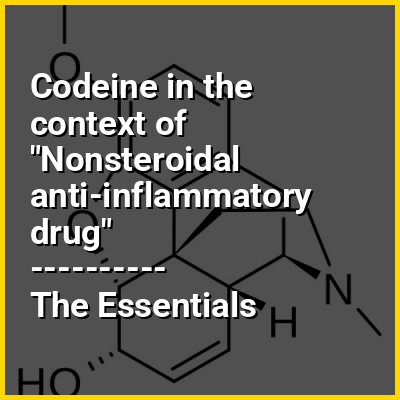
Codeine is an opiate and prodrug of morphine mainly used to treat pain, coughing, and diarrhea. It is also commonly used as a recreational drug. It is found naturally in the sap of the opium poppy, Papaver somniferum. It is typically used to treat mild to moderate degrees of pain. Greater benefit may occur when combined with paracetamol (acetaminophen) as codeine/paracetamol or a nonsteroidal anti-inflammatory drug (NSAID) such as aspirin or ibuprofen. Evidence does not support its use for acute cough suppression in children. In Europe, it is not recommended as a cough medicine for those under 12 years of age. It is generally taken by mouth. It typically starts working after half an hour, with maximum effect at two hours. Its effects last for about four to six hours. Codeine exhibits abuse potential similar to other opioid medications, including a risk of addiction and overdose.

Common side effects include nausea, vomiting, constipation, itchiness, lightheadedness, and drowsiness. Serious side effects may include breathing difficulties and addiction. Whether its use in pregnancy is safe is unclear. Care should be used during breastfeeding, as it may result in opiate toxicity in the baby. Its use as of 2016 is not recommended in children. Codeine works following being broken down by the liver into morphine; how quickly this occurs depends on a person's genetics.
↓ Menu

In this Dossier

Codeine in the context of Opium

Opium (also known as poppy tears, or Lachryma papaveris) is the dried latex obtained from the seed capsules of the opium poppy Papaver somniferum. Approximately 12 percent of opium is made up of the analgesic alkaloid morphine, which is processed chemically to produce heroin and other synthetic opioids for medicinal use and for the illegal drug trade. Opium's main psychoactive alkaloids, primarily morphine, act on μ-opioid receptors, causing analgesia and addiction with long-term use leading to tolerance, dependence, and increased cancer risk. The latex also contains the closely related opiates codeine and thebaine, and non-analgesic alkaloids such as papaverine and noscapine. The traditional, labor-intensive method of obtaining the latex is to scratch ("score") the immature seed pods (fruits) by hand; the latex leaks out and dries to a sticky yellowish residue that is later scraped off and dehydrated.

The English word for opium is borrowed from Latin, which in turn comes from Ancient Greek: ὄπιον (ópion), a diminutive of ὀπός (opós, "juice of a plant"). The word meconium (derived from the Greek for "opium-like", but now used to refer to newborn stools) historically referred to related, weaker preparations made from other parts of the opium poppy or different species of poppies. The Mediterranean region holds the earliest archaeological evidence of human use of opium poppies dating back to before 5000 BCE, with cultivation beginning around 3400 BCE in Mesopotamia. Opium was widely used for food, medicine, ritual, and as a painkiller throughout ancient civilizations including Greece, Egypt, and Islamic societies up to medieval times.

↑ Return to Menu

Codeine in the context of Psychoactive drug

A psychoactive drug, psychopharmaceutical, mind-altering drug, consciousness-altering drug, psychoactive substance, or psychotropic substance is a chemical substance that alters psychological functioning by modulating central nervous system (CNS) activity. Psychoactive and psychotropic drugs both affect the brain, with psychotropics sometimes referring to psychiatric drugs or high-abuse substances, while “drug” can have negative connotations. Novel psychoactive substances are designer drugs made to mimic illegal ones and bypass laws.

Psychoactive drug use dates back to prehistory for medicinal and consciousness-altering purposes, with evidence of widespread cultural use. Many animals intentionally consume psychoactive substances, and some traditional legends suggest animals first introduced humans to their use. Psychoactive substances are used across cultures for purposes ranging from medicinal and therapeutic treatment of mental disorders and pain, to performance enhancement. Their effects are influenced by the drug itself, the environment, and individual factors. Psychoactive drugs are categorized by their pharmacological effects into types such as anxiolytics (reduce anxiety), empathogen–entactogens (enhance empathy), stimulants (increase CNS activity), depressants (decrease CNS activity), and hallucinogens (alter perception and emotions). Psychoactive drugs are administered through various routes—including oral ingestion, injection, rectal use, and inhalation—with the method and efficiency differing by drug.

↑ Return to Menu

Codeine in the context of Opiate

An opiate is an alkaloid substance derived from opium (or poppy straw). It differs from the similar term opioid in that the latter is used to designate all substances, both natural and synthetic, that bind to opioid receptors in the brain (including antagonists). Opiates are alkaloid compounds naturally found in the opium poppy plant Papaver somniferum.The psychoactive compounds found in the opium plant include morphine, codeine, and thebaine. Opiates have long been used for a variety of medical conditions, with evidence of opiate trade and use for pain relief as early as the eighth century AD. Most opiates are considered drugs with moderate to high abuse potential and are listed on various "Substance-Control Schedules" under the Uniform Controlled Substances Act of the United States of America.

In 2014, between 13 and 20 million people used opioids recreationally, representing 0.3% to 0.4% of the global population between the ages of 15 and 65. According to the CDC, from this population, there were 47,000 deaths, with a total of 500,000 deaths from 2000 to 2014. In 2016, the World Health Organization reported that 27 million people suffer from opioid use disorder. They also reported that in 2015, 450,000 people died as a result of drug use, with between a third and a half of that number being attributed to opioids.

↑ Return to Menu

Codeine in the context of Thebaine

Thebaine (paramorphine), also known as codeine methyl enol ether, is an opiate alkaloid, its name coming from the Greek Θῆβαι, Thēbai (Thebes), an ancient city in Upper Egypt. A minor constituent of opium, thebaine is chemically similar to both morphine and codeine, but has stimulatory rather than depressant effects. At high doses, it causes convulsions similar to strychnine poisoning. The synthetic enantiomer (+)-thebaine does show analgesic effects apparently mediated through opioid receptors, unlike the inactive natural enantiomer (−)-thebaine. While thebaine is not used therapeutically, it is the main alkaloid extracted from Papaver bracteatum (Iranian opium / Persian poppy) and can be converted industrially into a variety of compounds, including hydrocodone, hydromorphone, oxycodone, oxymorphone, nalbuphine, naloxone, naltrexone, buprenorphine, butorphanol and etorphine.

Thebaine is controlled under international law, is listed as a Class A drug under the Misuse of Drugs Act 1971 in the United Kingdom, is controlled as an analog of a Schedule II drug per the Analog Act in the United States, and is controlled with its derivatives and salts, as a Schedule I substance of the Controlled Drugs and Substances Act in Canada. The 2013 US Drug Enforcement Administration (DEA) aggregate manufacturing quota for thebaine (ACSCN 9333) was unchanged from the previous year at 145 metric tons.

↑ Return to Menu

Codeine in the context of Papaverine

Papaverine (Latin papaver, "poppy") is an opium alkaloid antispasmodic drug, used primarily in the treatment of visceral spasms and vasospasms (especially those involving the intestines, heart, or brain), occasionally in the treatment of erectile dysfunction and acute mesenteric ischemia. While it is found in the opium poppy, papaverine differs in both structure and pharmacological action from the analgesic morphine and its derivatives (such as codeine).

In addition to opium, papaverine is purported to be present in high concentrations in star gooseberry.

↑ Return to Menu

Codeine in the context of Laudanum

Laudanum is a tincture of opium containing approximately 10% powdered opium by weight (the equivalent of 1% morphine). Laudanum is prepared by dissolving extracts from the opium poppy (Papaver somniferum) in alcohol (ethanol).

Reddish-brown in color and extremely bitter, laudanum contains several opium alkaloids, including morphine and codeine. Laudanum was historically used to treat a variety of conditions, but its principal use was as a pain medication and cough suppressant. Until the early 20th century, laudanum was sold without a prescription and was a constituent of many patent medicines. Laudanum has since been recognized as addictive and is strictly regulated and controlled throughout most of the world. The United States Controlled Substances Act, for example, lists it on Schedule II, the second strictest category.

↑ Return to Menu