City of London Police in the context of "Metropolitan Police Service"

Play Trivia Questions online!

or

Skip to study material about City of London Police in the context of "Metropolitan Police Service"


In this Dossier

City of London Police in the context of Metropolitan Police

The Metropolitan Police Service (MPS), commonly known as the Metropolitan Police, Met Police, or the "Met", is the territorial police force responsible for law enforcement and crime prevention within Greater London. In addition, it is responsible for specialised tasks throughout the United Kingdom, such as dealing with counter-terrorism throughout the UK, and the protection of certain individuals, including the monarch, royal family, governmental officials, and other designated figures. It is also referred to as an eponym as "Scotland Yard" or "the Yard", after the location of its original headquarters in Great Scotland Yard, Whitehall, in the 19th century. The Met is presently headquartered at New Scotland Yard, on the Victoria Embankment.

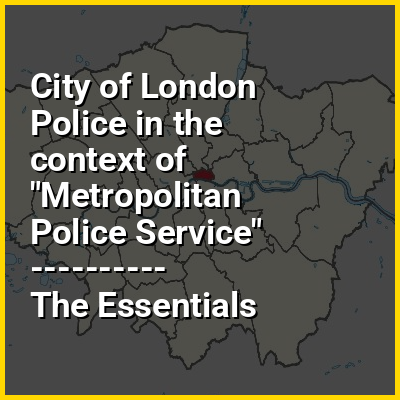
The main geographical area covered by the Met, the Metropolitan Police District, consists of the 32 London boroughs, and excludes the square mile of the City of London – a largely non-residential and financial district, overseen by the City of London Police. As the force responsible for the majority of the UK's capital, the Met has significant responsibilities and unique challenges, such as protecting 164 foreign embassies and High Commissions, policing London City and Heathrow airports, protecting the Palace of Westminster, and managing a higher volume of protests and events than any other British police force, with 3,500 such events in 2016.

↑ Return to Menu

City of London Police in the context of Shabrack

A shabrack or shabraque (Turkish: çaprak, Hungarian: csábrák) is a saddlecloth, formerly used by European light cavalry.

The shabraque was an accoutrement of the hussar cavalry, based on the Hungarian horsemen in Austrian service who were widely imitated in European armies in the 18th and 19th centuries. The shabraque was a large cloth which in its original form, covered the Hungarian-style saddle, and was itself surmounted by a sheep or goat skin. The corners of the shabraque were rounded at the front and elongated into long points at the rear. It could be elaborately decorated with a contrasting border and a royal cypher or regimental crest. It was often discarded while on active service and by the start of the 20th century, was confined to ceremonial use; in the British Army, it is used by the Household Cavalry and by General Staff officers.

↑ Return to Menu

City of London Police in the context of Metropolitan Police District

The Metropolitan Police District (MPD) is the police area which is policed by the Metropolitan Police Service in London. It currently consists of the ceremonial county of Greater London, which excludes the City of London. The Metropolitan Police District was created by the Metropolitan Police Act 1829 as an ad hoc area of administration because the built-up area of London spread at the time into many parishes and counties without an established boundary. The district expanded as the built up area grew and stretched some distance into rural land. When county police forces were set up in England, those of Essex, Hertfordshire, Kent and Surrey did not cover the parts of the counties within the MPD, while Middlesex did not have a county force. Similarly, boroughs in the MPD that elsewhere would have been entitled to their own police force did not have them.

The MPD was originally defined in reference to civil parishes and in 1946 was altered to correspond to local government districts. The MPD has been used for other purposes during its existence, such as the boundary for coal tax and as a 'Greater London' statistical unit. When the Greater London Council was established in 1965, the MPD was expanded to include all of its territory, though some areas that did not become part of Greater London continued to be within it. In 2000, when the Greater London Authority was formed, the outer boundary of the MPD was retracted to coincide with Greater London and the neighbouring county forces then became responsible for those areas outside Greater London. The MPD now consists of the 32 boroughs of Greater London (including the City of Westminster), while the City of London is served by the City of London Police.

↑ Return to Menu

City of London Police in the context of 2012 England and Wales police and crime commissioner elections

The 2012 police and crime commissioner elections were polls held in most police areas in England and Wales on Thursday 15 November. The direct election of police and crime commissioners (PCCs) was originally scheduled for May 2012 but was postponed in order to secure the passage of the Police Reform and Social Responsibility Act 2011 through the House of Lords. The government considers the elected commissioners to have a stronger mandate than the "unelected and invisible police authorities that they replace". The elections took place alongside by-elections for the House of Commons in Cardiff South and Penarth, Corby and Manchester Central, and a mayoral election in Bristol.

Police and crime commissioner elections were held in November for 41 of the 43 territorial police forces in England and Wales; the City of London Police and Metropolitan Police are overseen by the Court of Common Council and the elected Mayor of London respectively. Elections for police and crime commissioners did not take place in Scotland or Northern Ireland as policing and justice powers are devolved to the Scottish Parliament and Northern Ireland Assembly.

↑ Return to Menu

City of London Police in the context of Metropolitan Police Authority

The Metropolitan Police Authority (MPA) (2000–2012) was the local police authority responsible for scrutinising and supporting the work of the Metropolitan Police Service, the police force for Greater London (excluding the City of London Police area).

↑ Return to Menu

City of London Police in the context of Tug of war at the Summer Olympics

Tug of war was contested as a team event in the Summer Olympics at the Games of every Olympiad from 1900 to 1920. Originally the competition was entered by groups called clubs. A country could enter more than one club in the competition, making it possible for one country to earn multiple medals. This happened in 1904, when the United States won all three medals, and in 1908 when the podium was occupied by three British teams. Sweden was also among the top countries with two medals, one as a member of the mixed team.

During its time as an Olympic sport, it was considered to be part of the Olympic athletics programme, although the sports of tug of war and athletics are now considered distinct.

↑ Return to Menu

City of London Police in the context of Paternoster Row

Paternoster Row is a street in the City of London that was a centre of the London publishing trade, with booksellers operating from the street. Paternoster Row was described as "almost synonymous" with the book trade. It was part of an area called St Paul's Churchyard. In time Paternoster Row itself was used inclusively of various alleys, courts and side streets. Largely destroyed during aerial bombing in World War II, the street's area is now the site of much of the post-war Paternoster Square development.

↑ Return to Menu