Chūbu region in the context of "Hokuriku region"

Play Trivia Questions online!

or

Skip to study material about Chūbu region in the context of "Hokuriku region"

Ad spacer

⭐ Core Definition: Chūbu region

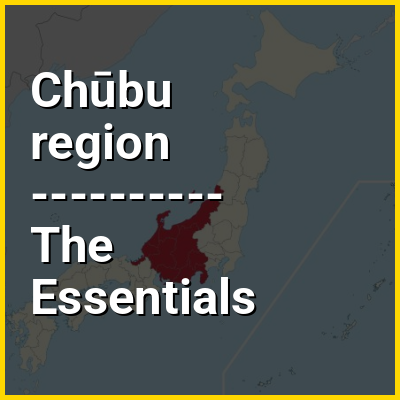
The Chūbu region (中部地方, Chūbu-chihō), Central region, or Central Japan (中部日本, Chūbu-nihon) is a large and diverse region in the middle of Honshū, Japan's main island. In a wide, classical definition, it encompasses nine prefectures (ken): Aichi, Fukui, Gifu, Ishikawa, Nagano, Niigata, Shizuoka, Toyama, and Yamanashi.

It is located directly between the Kantō region and the Kansai region and includes the major city of Nagoya as well as Pacific Ocean and Sea of Japan coastlines, extensive mountain resorts, and Mount Fuji.

↓ Menu

>>>PUT SHARE BUTTONS HERE<<<
In this Dossier

Chūbu region in the context of Greater Tokyo Area

The Greater Tokyo Area is the most populous metropolitan area in the world, consisting of the Kantō region of Japan (including Tokyo Metropolis and the prefectures of Chiba, Gunma, Ibaraki, Kanagawa, Saitama, and Tochigi) as well as the prefecture of Yamanashi of the neighboring Chūbu region. In Japanese, it is referred to by various terms, one of the most common being Capital Region (首都圏, Shuto-ken).

As of 2016, the United Nations estimates the total population at 38,140,000. It covers an area of approximately 13,500 km (5,200 mi), giving it a population density of 2,642 people/km. It is the second-largest single metropolitan area in the world in terms of built-up or urban function landmass at 8,547 km (3,300 mi), behind only the New York City metropolitan area at 11,642 km (4,495 mi). With over US$2 trillion in GDP, Tokyo remains the second-largest metropolitan economy in the world, also behind New York.

↑ Return to Menu

Chūbu region in the context of List of regions of Japan

Japan is often divided into regions, each containing one or more of the country's 47 prefectures at large. Sometimes, they are referred to as "blocs" (ブロック, burokku), or "regional blocs" (地域ブロック, chiiki burokku) as opposed to more granular regional divisions. They are not official administrative units, though they have been used by government officials for statistical and other purposes since 1905. They are widely used in, for example, maps, geography textbooks, and weather reports, and many businesses and institutions use their home regions in their names as well, for example Kyushu National Museum, Kinki Nippon Railway, Chūgoku Bank, and Tōhoku University.

One common division groups the prefectures into eight regions. In this arrangement, of the four main islands of Japan, Hokkaidō, Honshu, Shikoku, and Kyūshū, each form their own region, with Kyūshū also including the Satsunan Islands. The largest island, Honshū, is split into five regions. Okinawa Prefecture is usually considered part of Kyūshū, but it is sometimes treated as its own ninth region.
↑ Return to Menu

Chūbu region in the context of Yamanashi Prefecture

Yamanashi Prefecture (山梨県, Yamanashi-ken) is a prefecture of Japan located in the Chūbu region of Honshu. Yamanashi Prefecture has a population of 787,592 (1 February 2025) and has a geographic area of 4,465 km (1,724 sq mi). Yamanashi Prefecture borders Saitama Prefecture to the northeast, Nagano Prefecture to the northwest, Shizuoka Prefecture to the southwest, Kanagawa Prefecture to the southeast, and Tokyo to the east.

Kōfu is the capital and largest city of Yamanashi Prefecture, with other major cities including Kai, Minamiarupusu, and Fuefuki. Yamanashi Prefecture is one of only eight landlocked prefectures, and the majority of the population lives in the central Kōfu Basin surrounded by the Akaishi Mountains, with 27% of its total land area being designated as Natural Parks. Yamanashi Prefecture is home to many of the highest mountains in Japan, and Mount Fuji, the tallest mountain in Japan and cultural icon of the country, is partially located in Yamanashi Prefecture on the border with Shizuoka Prefecture.

↑ Return to Menu

Chūbu region in the context of Niigata Prefecture

Niigata Prefecture (新潟県, Niigata-ken; Japanese pronunciation: [ɲiː.ɡa.ta, -taꜜ.keɴ, ɲiː.ŋa-]) is a prefecture in the Chūbu region of Honshu of Japan. Niigata Prefecture has a population of 2071066 (1 October,2025) and is the fifth-largest prefecture of Japan by geographic area at 12,584.18 km (4,858.78 sq mi). Niigata Prefecture borders Toyama Prefecture and Nagano Prefecture to the southwest, Gunma Prefecture to the south, Fukushima Prefecture to the east, and Yamagata Prefecture to the northeast.

Niigata is the capital and largest city of Niigata Prefecture, with other major cities including Nagaoka, Jōetsu, and Sanjō. Niigata Prefecture contains the Niigata Major Metropolitan Area centered on Niigata with a population of 1,395,612, the largest metropolitan area on the Sea of Japan coast and the twelfth-largest in Japan. Niigata Prefecture is part of the historic Hokuriku region and features Sado Island, the sixth largest island of Japan in area following the four main islands and Okinawa Island.

↑ Return to Menu

Chūbu region in the context of Nagano Prefecture

Nagano Prefecture (長野県, Nagano-ken; Japanese pronunciation: [naꜜɡano, naɡanoꜜkeɴ]) is a landlocked prefecture of Japan located in the Chūbu region of Honshu. It has a population of 2,007,682 as of 1 July 2023 and a geographic area of 13,561.56 square kilometres (5,236.15 sq mi). It borders Niigata Prefecture to the north, Gunma Prefecture to the northeast, Saitama Prefecture to the east, Yamanashi Prefecture to the southeast, Shizuoka Prefecture and Aichi Prefecture to the south, and Gifu Prefecture and Toyama Prefecture to the west.

Nagano is the prefecture's capital and largest city, with other major cities including Matsumoto, Ueda, and Iida. The prefecture is known for its impressive highland areas of the Japanese Alps, including most of the Hida Mountains, Kiso Mountains, and Akaishi Mountains, which extend into neighbouring prefectures; it contains nine of the twelve highest mountains in Japan. Its mountain ranges, natural scenery, and history have gained the prefecture international recognition as a winter sports tourist destination, and it received further attention as the host of the 1998 Winter Olympics. It is served by the Hokuriku Shinkansen railway line with direct services to Tokyo, Toyama, and Kanazawa.

↑ Return to Menu

Chūbu region in the context of Shizuoka Prefecture

Shizuoka Prefecture (静岡県, Shizuoka-ken; Japanese pronunciation: [ɕi.(d)zɯꜜ.o.ka, ɕi.(d)zɯ.o.kaꜜ.keɴ]) is a prefecture of Japan located in the Chūbu region of Honshu. As of September 2023, Shizuoka Prefecture has a population of 3,555,818 and has a geographic area of 7,777.42 km (3,002.88 sq mi). Shizuoka Prefecture borders Kanagawa Prefecture to the east, Yamanashi Prefecture to the northeast, Nagano Prefecture to the north, and Aichi Prefecture to the west.

Shizuoka is the capital and Hamamatsu is the largest city in Shizuoka Prefecture, with other major cities including Fuji, Numazu, and Iwata. Shizuoka Prefecture is located on Japan's Pacific Ocean coast and features Suruga Bay formed by the Izu Peninsula, and Lake Hamana which is considered to be one of Japan's largest lakes. Mount Fuji, the tallest volcano in Japan and cultural icon of the country, is partially located in Shizuoka Prefecture on the border with Yamanashi Prefecture. Shizuoka Prefecture has a significant motoring heritage as the founding location of Honda, Suzuki, and Yamaha, and is home to the Fuji International Speedway.

↑ Return to Menu

Chūbu region in the context of Aichi Prefecture

Aichi Prefecture (愛知県, Aichi-ken; Japanese pronunciation: [aꜜi.tɕi, ai.tɕi̥ꜜ.keɴ]) is a prefecture of Japan located in the Chūbu region of Honshū. Aichi Prefecture has a population of 7,461,111 (as of 1 January 2025) and a geographic area of 5,172.92 square kilometres (1,997.28 sq mi) with a population density of 1,442 inhabitants per square kilometre (3,730/sq mi). Aichi Prefecture borders Mie Prefecture to the west, Gifu Prefecture and Nagano Prefecture to the north, and Shizuoka Prefecture to the east. Nagoya is the capital and largest city of the prefecture.

↑ Return to Menu

Chūbu region in the context of Fukui Prefecture

Fukui Prefecture (福井県, Fukui-ken; Japanese pronunciation: [ɸɯ̥.kɯ(ꜜ)(.)i, -kɯ.iꜜ.keɴ, -kɯꜜi.keɴ]) is a prefecture of Japan located in the Chūbu region of Honshū. Fukui Prefecture has a population of 737,229 (1 January 2025) and has a geographic area of 4,190 km (1,617 sq mi). Fukui Prefecture borders Ishikawa Prefecture to the north, Gifu Prefecture to the east, Shiga Prefecture to the south, and Kyoto Prefecture to the southwest.

Fukui is the capital and largest city of Fukui Prefecture, with other major cities including Sakai, Echizen, and Sabae. Fukui Prefecture is located on the Sea of Japan coast and is part of the historic Hokuriku region of Japan. The Matsudaira clan, a powerful samurai clan during the Edo period that became a component of the Japanese nobility after the Meiji Restoration, was headquartered at Fukui Castle on the site of the modern prefectural offices. Fukui Prefecture is home to the Kitadani Formation and Kitadani Family, the Ichijōdani Asakura Family Historic Ruins, and the Tōjinbō cliff range.

↑ Return to Menu

Chūbu region in the context of Gifu Prefecture

Gifu Prefecture (岐阜県, Gifu-ken; Japanese pronunciation: [ɡʲi.ɸɯ, ɡʲi.ɸɯ̥ꜜ.keɴ]) is a prefecture of Japan located in the Chūbu region of Honshu. Gifu Prefecture has a population of 2,040,000 (as of April 1, 2025) and has a geographic area of 10,621 square kilometres (4,101 sq mi). Gifu Prefecture borders Toyama Prefecture to the north; Ishikawa Prefecture to the northwest, Fukui Prefecture and Shiga Prefecture to the west, Mie Prefecture to the southwest, Aichi Prefecture to the south, and Nagano Prefecture to the east.

Gifu is the capital and largest city of Gifu Prefecture, with other major cities including Ōgaki, Kakamigahara, and Tajimi.

↑ Return to Menu