Church of the Gesù in the context of "Jesuit"

Play Trivia Questions online!

or

Skip to study material about Church of the Gesù in the context of "Jesuit"

Ad spacer

⭐ Core Definition: Church of the Gesù

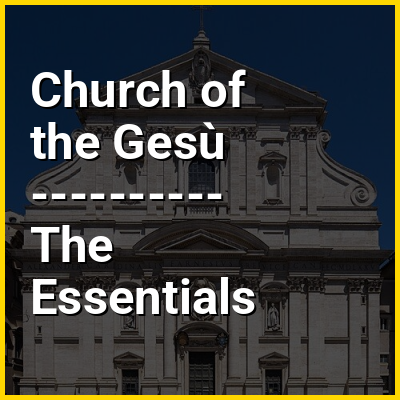
The Church of the Gesù (Italian: Chiesa del Gesù, pronounced [ˈkjɛːza del dʒeˈzu]), officially named Chiesa del Santissimo Nome di Gesù (English: Church of the Most Holy Name of Jesus), is a church located at Piazza del Gesù in the Pigna rione of Rome, Italy. It is the mother church of the Society of Jesus (best known as Jesuits). With its façade, described as "the first truly baroque façade", the church served as a model for innumerable Jesuit churches all over the world, especially in Central Europe and in Portuguese colonies. Its paintings in the nave, crossing, and side chapels became models for art in Jesuit churches throughout Italy and Europe, as well as those of other orders. The Church of the Gesù is one of the great 17th-century preaching churches built by Counter-Reformation orders like the Jesuits in the Centro Storico of Rome – the others being Sant'Ignazio, also of the Jesuits, San Carlo ai Catinari of the Barnabites, Sant'Andrea della Valle of the Theatines, and the Chiesa Nuova of the Oratorians.

First conceived in 1551 by Saint Ignatius of Loyola, the Spanish founder of the Society of Jesus active during the Protestant Reformation and the subsequent Catholic Counter-Reformation, the Gesù was also the home of the Superior General of the Society of Jesus until the wide suppression of the order in 1773. The church having been subsequently regained by the Jesuits, the adjacent palazzo is now a residence for Jesuit scholars from around the world studying at the Gregorian University in preparation for ordination to the priesthood.
↓ Menu

>>>PUT SHARE BUTTONS HERE<<<
In this Dossier

Church of the Gesù in the context of Jesuit missionaries

The Society of Jesus (Latin: Societas Iesu; abbreviation: S.J. or SJ), also known as the Jesuit Order or the Jesuits (/ˈɛʒuɪts, ˈɛzju-/ JEZH-oo-its, JEZ-ew-; Latin: Iesuitae), is a religious order of clerics regular of pontifical right for men in the Catholic Church headquartered in Rome. It was founded in 1540 by Ignatius of Loyola and six companions, with the approval of Pope Paul III. The Society of Jesus is the largest religious order in the Catholic Church and has played a significant role in education, charity, humanitarian acts and global policies. The Society of Jesus is engaged in evangelization and apostolic ministry in 112 countries. Jesuits work in education, research, and cultural pursuits. They also conduct retreats, minister in hospitals and parishes, sponsor direct social and humanitarian works, and promote ecumenical dialogue.

The Society of Jesus is consecrated under the patronage of Madonna della Strada, a title of the Blessed Virgin Mary, and it is led by a superior general. The headquarters of the society, its general curia, is in Rome. The historic curia of Ignatius is now part of the Collegio del Gesù attached to the Church of the Gesù, the Jesuit mother church.

↑ Return to Menu

Church of the Gesù in the context of Names and titles of Jesus in the New Testament

Two names and a variety of titles are used to refer to Jesus in the New Testament. In Christianity, the two names Jesus and Emmanuel that refer to Jesus in the New Testament have salvific attributes. After the crucifixion of Jesus the early Church did not simply repeat his messages, but focused on him, proclaimed him, and tried to understand and explain his message. One element of the process of understanding and proclaiming Jesus was the attribution of titles to him. Some of the titles that were gradually used in the early Church and then appeared in the New Testament were adopted from the Jewish context of the age, while others were selected to refer to, and underscore the message, mission and teachings of Jesus. In time, some of these titles gathered Christological significance.

Christians have attached theological significance to the Holy Name of Jesus. The use of the name of Jesus in petitions is stressed in John 16:23 when Jesus states: "If you ask the Father anything in my name he will give it you." There is widespread belief among Christians that the name Jesus is not merely a sequence of identifying symbols but includes intrinsic divine power.

↑ Return to Menu

Church of the Gesù in the context of Triumph of the Name of Jesus

Triumph of the Name of Jesus is a 17th-century fresco painting by Giovanni Battista Gaulli. The fresco occupies the nave of the Church of the Gesù in Rome, with both fresco painting and stucco molding.

↑ Return to Menu

Church of the Gesù in the context of Giovanni Battista Gaulli

Giovanni Battista Gaulli (8 May 1639 – 2 April 1709), also known as Baciccio or Baciccia (Genoese nicknames for Giovanni Battista), was an Italian Baroque painter working in the High Baroque and early Rococo periods. He is best known for his grand illusionistic vault frescos in the Church of the Gesù in Rome. His work was influenced by Gian Lorenzo Bernini.

↑ Return to Menu

Church of the Gesù in the context of Holy Name of Jesus

In Catholicism, the veneration of the Holy Name of Jesus (also Most Holy Name of Jesus, Italian: Santissimo Nome di Gesù) developed as a separate type of devotion in the early modern period, in parallel to that of the Sacred Heart. The Litany of the Holy Name is a Roman-rite Catholic prayer, probably of the 15th century (Bernardino of Siena and John of Capistrano). The Feast of the Holy Name of Jesus was introduced in 1530.

The veneration of Nomina sacra in the form of variants of the Christogram has a tradition going back to early Christianity.Related practices of devotion exist in Eastern Christianity (cf. Jesus Prayer). The feast day is celebrated either as the Feast of the Holy Name of Jesus or as that of Circumcision of Jesus, in various Christian churches.

↑ Return to Menu

Church of the Gesù in the context of Sant'Andrea della Valle

Sant'Andrea della Valle is a titular church and minor basilica in the rione of Sant'Eustachio of the city of Rome, Italy. The basilica is the seat of the general curia of the Theatines and is located on the Piazza Vidoni, at the intersection of Corso Vittorio Emanuele (facing facade) and Corso Rinascimento. It is one of the great 17th century preaching churches built by Counter-Reformation orders in the Centro Storico (the others being San Carlo ai Catinari of the Barnabites, The Gesù and Sant'Ignazio of the Jesuits, and the Chiesa Nuova of the Oratorians).

↑ Return to Menu