Chlorella vulgaris in the context of "Martinus Beijerinck"

Play Trivia Questions online!

or

Skip to study material about Chlorella vulgaris in the context of "Martinus Beijerinck"


⭐ Core Definition: Chlorella vulgaris

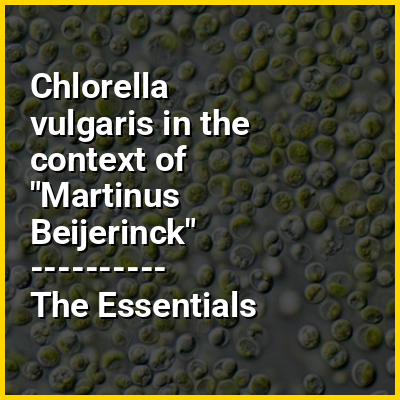
Chlorella vulgaris is a species of green microalga in the division Chlorophyta. This unicellular alga was discovered in 1890 by Martinus Willem Beijerinck as the first microalga with a well-defined nucleus. It is the type species of the genus Chlorella. It is found in freshwater and terrestrial habitats, and has a cosmopolitan distribution.

Chlorella vulgaris has a number of potential applications in science, such as biofuel, livestock feed, and wastewater treatment. Beginning in the 1990s, German scientists noticed the high protein content of C. vulgaris and began to consider it as a new food source. Japan is currently the largest consumer of Chlorella, both for nutritional and therapeutic purposes, and it is used as a dietary supplement or protein-rich food additive in several countries worldwide.
↓ Menu

In this Dossier

Chlorella vulgaris in the context of Hydra viridissima

Hydra viridissima is a species of cnidarian which is commonly found in still or slow-moving freshwater in the Northern temperate zone. Hydra viridissima is commonly called green hydra due to its coloration, which is due to the symbiotic green algae Chlorella vulgaris which live within its body. Recent genomic research has shown that Hydra viridissima suppresses parts of its innate immune system to allow its symbiotic Chlorella algae to survive within its cells. This adaptation provides insight into the evolution of intracellular symbiosis in early metazoans. These creatures are typically 10 mm long and have tentacles that are about half of their length. They are strictly carnivorous and typically feed on small crustaceans, insects and annelids. Hydra are normally sessile and live on aquatic vegetation. They secrete mucus to attach to substrate using their basal disc.

↑ Return to Menu