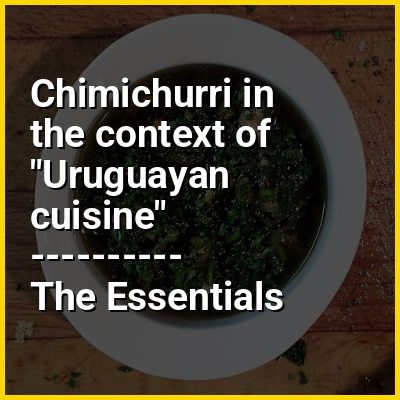
Chimichurri (Spanish: [tʃimiˈtʃuri]) is an uncooked sauce used as an ingredient in cooking and as a table condiment for grilled meat. Found originally in Argentina and used in Argentinian, Uruguayan, Paraguayan and Brazilian cuisines, it has become widely adopted in most of Latin America. The sauce comes in green (chimichurri verde) and red (chimichurri rojo) varieties. It is made of finely chopped flat-leaf parsley, chili peppers, minced garlic, olive oil, oregano, and red wine vinegar or lemon juice. It is similar to Moroccan chermoula and Italian pesto.
HINT:
In this Dossier
Chimichurri in the context of Hispanic cuisine
Latin American cuisine is the typical foods, beverages, and cooking styles common to many of the countries and cultures in Latin America. Latin America is a highly racially, ethnically, and geographically diverse with varying cuisines. Some items typical of Latin American cuisine include maize-based dishes arepas, empanadas, pupusas, tacos, tamales, tortillas and various salsas and other condiments (guacamole, pico de gallo, mole, chimichurri, chili, aji, pebre). Sofrito, a culinary term that originally referred to a specific combination of sautéed or braised aromatics, exists in Latin American cuisine. It refers to a sauce of tomatoes, roasted bell peppers, garlic, onions and herbs. Rice, corn, pasta, bread, plantain, potato, yucca, and beans are also staples in Latin American cuisine.
Latin American beverages are just as distinct as their foods. Some of the beverages predate colonization. Some popular beverages include coffee, mate, guayusa, hibiscus tea, horchata, chicha, atole, cacao and aguas frescas.
View the full Wikipedia page for Hispanic cuisine