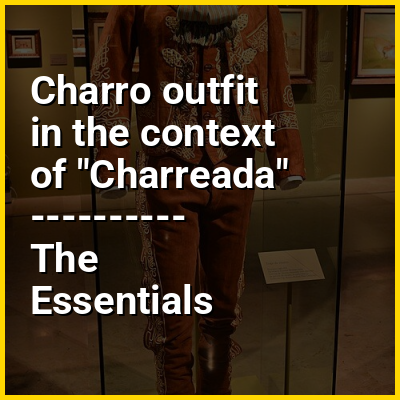
A charro or charra outfit or suit (traje de charro, in Spanish) is a style of dress originating in Mexico and based on the clothing of a type of horseman, the charro. The style of clothing is often associated with charreada participants, mariachi music performers, Mexican history, and celebration in festivals. The charro outfit is one that is associated with Mexico around the world. It is seen as a national emblem and a way to express personal pride in Mexican heritage. Charro outfits can be worn by men or women and have various levels of formality from work-wear to very expensive formal attire. The outfits consist of tight, decorated pants or a long skirt, short jackets, silk ties and are often worn with a wide-brimmed sombrero and other accessories as appropriate.
Charro outfit in the context of Mariachi
Mariachi (US: /ˌmɑːriˈɑːtʃi/, UK: /ˌmær-/, Spanish: [maˈɾiaʧi]) is a genre of regional Mexican music dating back to at least the 18th century, evolving over time in the countryside of various regions of western Mexico. The usual mariachi group today consists of as many as eight violins, two trumpets and at least one guitar, including a high-pitched Mexican Vihuela and an acoustic bass guitar called a guitarrón, and all players take turns singing lead and doing backup vocals.
During the 19th- and 20th-century migrations from rural areas into Guadalajara, along with the Mexican government's promotion of national culture, mariachi came to be recognized as a distinctly Mexican son. Modifications of the music include influences from other music, such as polkas and waltzes, the addition of trumpets, and the use of charro outfits by mariachi musicians. The musical style began to take on national prominence in the first half of the 20th century, with its promotion at presidential inaugurations and on the radio in the 1920s. In 2011, UNESCO recognized mariachi as an Intangible Cultural Heritage; it joins six other entries on the Mexican list.
View the full Wikipedia page for Mariachi