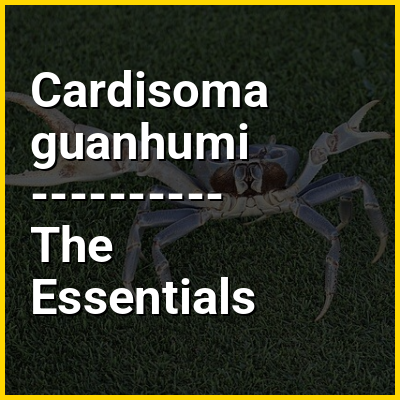
Cardisoma guanhumi, also known as the blue land crab or great land crab, is a species of land crab found in tropical and subtropical estuaries and other maritime areas of land along the Atlantic coast of the Americas from Brazil and Colombia, through the Caribbean and Gulf of Mexico, to the Bahamas, and north to Ponce Inlet, Florida, Princess Place Preserve in Palm Coast, and Bermuda. The species varies in colour from dark blue to brown or pale grey, and may grow to 15 centimetres (6 in) in carapace width and weigh over 500 grams (18 oz).
HINT:
In this Dossier
Cardisoma guanhumi in the context of Shellfish
Shellfish, in colloquial and fisheries usage, are exoskeleton-bearing aquatic invertebrates used as food, including various species of molluscs, crustaceans, and echinoderms. Although most kinds of shellfish are harvested from saltwater environments, some are found in freshwater. In addition, a few species of land crabs are eaten, for example Cardisoma guanhumi in the Caribbean. Shellfish are among the most common food allergens.
Due to narrowing in the meaning of the English word fish over the centuries, shellfish no longer fall under what is usually considered fish. Most shellfish are low on the food chain and eat a diet composed primarily of phytoplankton and zooplankton. Many varieties of shellfish, and crustaceans in particular, are actually closely related to insects and arachnids; crustaceans make up one of the main subphyla of the phylum Arthropoda. Molluscs include cephalopods (squids, octopuses, cuttlefish) and bivalves (clams, oysters), as well as gastropods (aquatic species such as whelks and winkles; land species such as snails and slugs).
View the full Wikipedia page for Shellfish