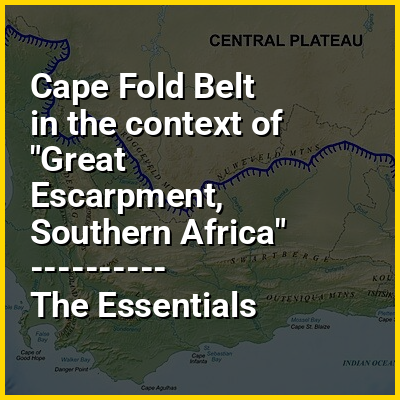
The Cape Fold Belt (CFB) is a 1,300 kilometres (810 mi) long fold-and-thrust mountain belt along the western and southern coastlines of Western Cape, South Africa. The Cape Fold Belt formed during the Permian period (300 to 250 million years ago) in the late Paleozoic age, affecting the sequence of sedimentary rock layers of the siliciclastic Cape Supergroup with folding and faulted rocks, which were deposited in the Cape Basin in the southwestern corner of South Africa.
The Cape Fold Belt was once part of a larger orogenic belt with other mountain ranges that formed as part of the same tectonic event that originally extended from Argentina, across southern Africa, and into Antarctica. It included the Ventana Mountains near Bahía Blanca in Argentina, the Pensacola Mountains in East Antarctica, the Ellsworth Mountains in West Antarctica, and the Hunter–Bowen orogeny in eastern Australia. The rocks involved in this fold system are primarily sandstones and shales, with shales from the Bokkeveld Group persisting in valley floors, while the more erosion-resistant sandstones of the Peninsula Formation form the parallel ranges of the Cape Fold Mountains. The highest peak in the range is Seweweekspoortpiek, which reaches 2,325 meters.