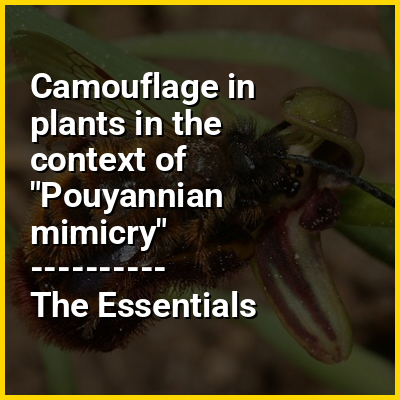
In evolutionary biology, mimicry in plants is where a plant evolves to resemble another organism physically or chemically. Mimicry in plants has been studied far less than mimicry in animals. It may provide protection against herbivory, or may deceptively encourage mutualists, like pollinators, to provide a service without offering a reward in return.
Types of plant mimicry include Bakerian mimicry, where female flowers imitate males of the same species; Dodsonian mimicry, where a plant mimics a rewarding flower, luring pollinators by mimicking another species of flower, or fruit where feeders of the other species are attracted to a fake fruit to distribute seeds; Gilbertian, where a plant has structures like butterfly eggs, dissuading egg-laying; Vavilovian, where a weed is unintentionally selected to resemble a crop plant; Pouyannian, in which a flower imitates a female mate, deceiving a male pollinating insect into pseudocopulation; Batesian, where a harmless species deters predators by mimicking the characteristics of a harmful species; and leaf mimicry, where a plant is camouflaged by resembling a nearby plant to evade the attention of herbivores.