Butt of Lewis in the context of Na h-Eileanan an Iar


Butt of Lewis in the context of Na h-Eileanan an Iar

⭐ Core Definition: Butt of Lewis

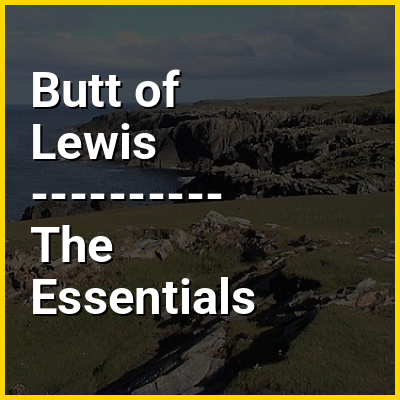
The Butt of Lewis (Scottish Gaelic: Rubha Robhanais) is the most northerly point on the Island of Lewis, in the Outer Hebrides, Scotland. The headland, which lies in the North Atlantic, is frequently battered by heavy swells and storms and is marked by the Butt of Lewis Lighthouse. The nearest populated area is the village of Eoropie, about 1 mile (1.5 kilometres) to the south.

The road to the lighthouse passes a sheltered cove called Port Stoth. Southwest from the lighthouse is a natural arch called the "Eye of the Butt" (Scottish Gaelic: Sùil an Rubha).

↓ Menu
HINT:

In this Dossier

Butt of Lewis in the context of Outer Hebrides

The Outer Hebrides (/ˈhɛbrɪdz/ HEB-rid-eez) or Western Isles (Scottish Gaelic: na h-Eileanan Siar [nə ˈhelanən ˈʃiəɾ] , na h-Eileanan an Iar [nə ˈhelanən əɲ ˈiəɾ] or na h-Innse Gall, 'Islands of the Strangers'), sometimes known as the Long Isle or Long Island (Scottish Gaelic: an t-Eilean Fada), is an island chain off the west coast of mainland Scotland. It is the longest archipelago in the British Isles. The islands form part of the archipelago of the Hebrides, separated from the Scottish mainland and from the Inner Hebrides by the waters of the Minch, the Little Minch, and the Sea of the Hebrides. The Outer Hebrides are considered to be the traditional heartland of the Gaelic language. The islands form one of the 32 council areas of Scotland, which since 1998 has used only the Gaelic form of its name, including in English language contexts. The council area is called Na h-Eileanan an Iar ('the Western Isles') and its council is Comhairle nan Eilean Siar ('Council of the Western Isles').

Most of the islands have a bedrock formed from ancient metamorphic rocks, and the climate is mild and oceanic. The 19 inhabited islands had an estimated population of 26,020 in 2024, and there are more than 50 substantial uninhabited islands. The distance from Barra Head to the Butt of Lewis is roughly 210 kilometres (130 mi).

View the full Wikipedia page for Outer Hebrides
↑ Return to Menu

Butt of Lewis in the context of Butt of Lewis Lighthouse

Butt of Lewis Lighthouse, designed by David Stevenson, was built at Butt of Lewis to aid shipping in the 1860s. Unusual for a lighthouse in Scotland, it is constructed of red brick, and is unpainted. The station was automated in 1998, one of the last to be converted. A modern differential GPS base station has now been sited on a nearby hill to further aid navigation. This hill was also the site for a Lloyd's Signal Station from the 1890s.

The road to the lighthouse passes a sheltered cove called Port Stoth. Agricultural lazy beds are also visible along the coast. The Butt of Lewis features some of the oldest rocks in Europe, having been formed in the Precambrian period up to 3 billion years ago. Following the coast southwest from the lighthouse there is a natural arch called the "Eye of the Butt" (Scottish Gaelic: Toll a’ Ròigh). It can be best viewed from the Habost machair.

View the full Wikipedia page for Butt of Lewis Lighthouse
↑ Return to Menu

Butt of Lewis in the context of Eoropie

Eoropie (Scottish Gaelic: Eòrapaidh) is the most northerly village on the Isle of Lewis in the parish of Ness, in the Outer Hebrides, Scotland. Eoropie is within the parish of Barvas. The Teampull Mholuaidh is found here. Eoropie is situated at the end of the B8013 and B8014 roads, from Lionel and Port of Ness, respectively.

It is just south of the Butt of Lewis and contains the Eoropie Dunes Park.

View the full Wikipedia page for Eoropie
↑ Return to Menu

Butt of Lewis in the context of Port Stoth

Port Stoth, known locally as Stoth and pronounced Stow, is a sheltered inlet just southeast of the Butt of Lewis in the Outer Hebrides, Scotland. It is the most northerly landing in the Outer Hebrides. A track leads down to a slipway which runs across the sandy beach.

Port Stoth is about 400 yards (370 m) from the Butt of Lewis Lighthouse. All the materials for the construction of the lighthouse (between 1859 and 1862) were brought by ship and landed in Port Stoth, due to lack of road infrastructure. The port continued to play an important role in bringing supplies to the lighthouse until about 1960. Supplies and fuel were brought in small cargo vessels when the weather allowed, and were unloaded in Port Stoth by crane. The concrete base still remains, as does a brick storage building.

View the full Wikipedia page for Port Stoth
↑ Return to Menu