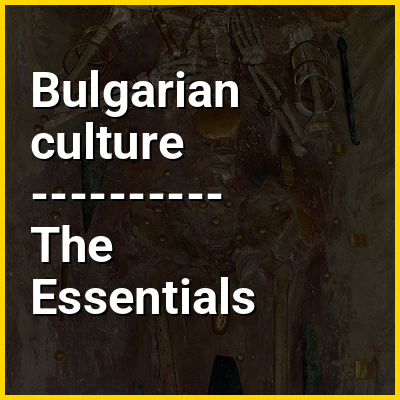
The culture of Bulgaria has deep roots in the traditions of the Slavic people who settled the Balkans in the early Middle Ages, with influence from the Byzantine civilisation, Thracian heritage and early Christianity. Over the centuries, the Bulgarian cultural identity developed through interaction with neighbouring peoples, including elements from the Roman and Ottoman periods.
Thracian artifacts include numerous temples, tombs, golden treasures and ancient rites and rituals, while the Bulgars have left traces of their heritage in statehood, early architecture, music and dances. Thracian rituals such as the Tryphon Zarezan which is dedicated to Saint Tryphon of Campsada, Kukeri and Martenitsa are to this day kept alive in the modern Bulgarian culture.The oldest treasure of worked gold in the world, dating back to the 5th millennium BC, comes from the site of the Varna Necropolis.