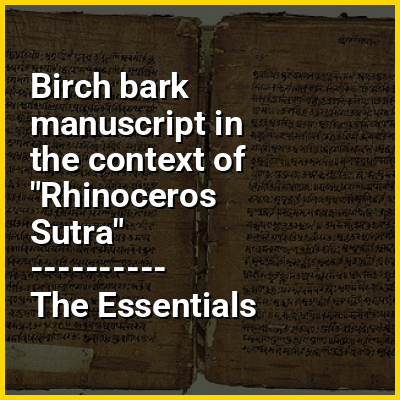
Birch bark manuscripts are documents written on pieces of the outer layer of birch bark, which was commonly used for writing before the mass production of paper. Evidence of birch bark for writing goes back many centuries and appears in various cultures. The oldest such manuscripts are the numerous Gandhāran Buddhist texts from approximately the 1st century CE, from what is now Afghanistan. They contain among the earliest known versions of significant Buddhist scriptures, including a Dhammapada, discourses of Buddha that include the Rhinoceros Sutra, Avadanas and Abhidharma texts.
Sanskrit birch bark manuscripts written with Brahmi script have been dated to the first few centuries CE. Several early Sanskrit writers, such as Kālidāsa (c. 4th century CE), Sushruta (c. 3rd century CE), and Varāhamihira (6th century CE) mention its use for manuscripts. The bark of Betula utilis (Himalayan Birch) is still used today in India and Nepal for writing sacred mantras. Russian texts discovered in Veliky Novgorod have been dated to approximately the 11th to 15th centuries CE. Most of those documents are letters written by various people in a local dialect, Old Novgorodian. The Irish language's native writing system Ogham, sometimes called the "tree alphabet", was traditionally attributed to the god Ogma who wrote a proscription on birch to Lugh, warning him; the text of this proscription can be found in the Book of Ballymote. The first letter of Ogham is beith; beithe means "birch".