Bi-fuel vehicle in the context of "Multifuel"

Play Trivia Questions online!

or

Skip to study material about Bi-fuel vehicle in the context of "Multifuel"

Ad spacer

⭐ Core Definition: Bi-fuel vehicle

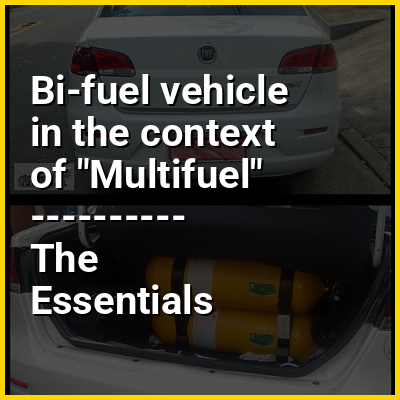
Bi-fuel vehicles are vehicles with multifuel engines capable of running on two fuels. The two fuels are stored in separate tanks and the engine runs on one fuel at a time. On internal combustion engines, a bi-fuel engine typically burns gasoline and a volatile alternate fuel such as natural gas (CNG), LPG, or hydrogen. Bi-fuel vehicles switch between gasoline and the other fuel, manually or automatically. A related concept is the dual-fuel vehicle which must burn both fuels in combination. Diesel engines converted to use gaseous fuels fall into this class due to the different ignition system.

The most common technology and alternate fuel available in the market for bi-fuel gasoline cars is Autogas (LPG), followed by natural gas (CNG), and it is used mainly in Europe. Poland, the Netherlands, and the Baltic states have many cars running with LPG. Italy currently has the largest number of CNG vehicles, followed by Sweden. They are also used in South America, where these vehicles are mainly used as taxicabs in main cities of Brazil and Argentina. Normally, standard gasoline vehicles are retrofitted in specialized shops, which install the gas cylinder in the trunk and the LPG or CNG injection system and electronics. The conversion is possible because the gases can use the spark ignition of a gasoline engine.
↓ Menu

>>>PUT SHARE BUTTONS HERE<<<
In this Dossier

Bi-fuel vehicle in the context of Compressed natural gas

Compressed natural gas (or simply shortened as CNG) is a fuel gas mainly composed of methane (CH4), compressed to less than 1% of the volume it occupies at standard atmospheric pressure. It is stored and distributed in hard containers at a pressure of 20–25 megapascals (2,900–3,600 psi; 200–250 bar), usually in cylindrical or spherical shapes.

CNG is used in traditional petrol/internal combustion engine vehicles that have been modified, or in vehicles specifically manufactured for CNG use: either alone (dedicated), with a segregated liquid fuel system to extend range (dual fuel), or in conjunction with another fuel (bi-fuel). It can be used in place of petrol, diesel fuel, and liquefied petroleum gas (LPG). CNG combustion produces fewer undesirable gases than the aforementioned fuels. In comparison to other fuels, natural gas poses less of a threat in the event of a spill, because it is lighter than air and disperses quickly when released. Biomethane, biogas from anaerobic digestion or landfill, can be used.

↑ Return to Menu