Barcelonès in the context of Sant Adrià de Besòs


Barcelonès in the context of Sant Adrià de Besòs

⭐ Core Definition: Barcelonès

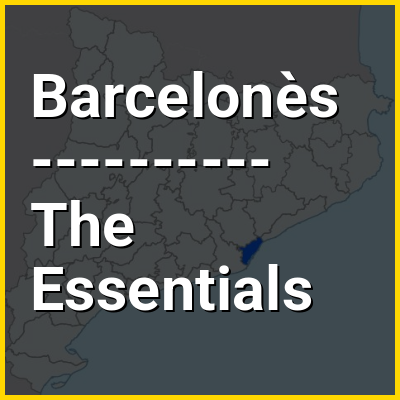
Barcelonès (Catalan pronunciation: [bəɾsəluˈnɛs]) is the most populated comarca of Catalonia, Spain. It contains Barcelona, which is the capital of Catalonia and of the comarca itself, and four adjacent inner suburbs.

Notwithstanding, the comarca does not have a governing comarcal council; it was dissolved in 2019. Its functions had been and are superseded by the Metropolitan Council of the Barcelona Metropolitan Area (AMB), which include representatives from municipalities further outside the comarca itself. All combined, Barcelonès municipalities send 39 councilors out of the Metropolitan Council's 90, making up more than 43% of the council voting power.
↓ Menu
HINT:

👉 Barcelonès in the context of Sant Adrià de Besòs

Sant Adrià de Besòs (Catalan pronunciation: [ˈsant əðɾiˈa ðə βəˈzɔs]) is a city and a municipality within the comarca of Barcelonès in Catalonia, north-eastern Spain. It is situated on the Mediterranean coast, at the mouth of river Besòs, extending to both sides of the estuary although the original settlement with the parish church lies on the left bank of the river, in the northern part of town. Sant Adrià is the smallest municipality of Barcelonès and has close ties with the neighbouring cities of Barcelona, Badalona and Santa Coloma de Gramenet, forming a uniform urban area within Barcelona metropolitan area.

The municipality straddles major transportation networks and is served by several modes of public transport. Sant Adrià is currently a town dominated by the service sector, but with a diverse manufacturing sector (especially in the areas of metal-work, chemistry, and construction) consisting mostly of medium-sized companies. Historically, it has experienced several massive migration flows attracted by the important industrialisation of the area during the last century and has been subject of various major urban redevelopments. In 2004, Sant Adrià de Besòs was part of the Universal Forum of Cultures.

↓ Explore More Topics
In this Dossier

Barcelonès in the context of Comarques of Catalonia

The comarques of Catalonia (singular comarca, Eastern Catalan: [kuˈmarkə], Western Catalan: [koˈmaɾka]), often referred to in English as counties, are an administrative division of Catalonia. Each comarca comprises a number of municipalities, roughly equivalent to a county in the United States. Currently, Catalonia is divided into 42 comarques and Aran, considered a "unique territorial entity" and not a comarca.

Each comarca has a representative county council (Catalan: consell comarcal), except for Barcelonès, which abolished it in 2019, and Aran, which instead has the Conselh Generau d'Aran.

View the full Wikipedia page for Comarques of Catalonia
↑ Return to Menu

Barcelonès in the context of L'Hospitalet de Llobregat

L'Hospitalet de Llobregat (Catalan pronunciation: [luspitəˈlɛd ʎuβɾəˈɣat; ˌlɔs-]; Spanish: Hospitalet de Llobregat), often shortened to L'Hospitalet or just L'H, is a city and municipality in the autonomous community of Catalonia in Spain. It is part of the Barcelona metropolitan area, the Barcelona province, the Barcelonès comarca and of the Barcelona conurbation. With a population of 282,299 as of 2024, it is the 15th-largest city in Spain and the 2nd-largest city in Catalonia.

By population, it is the second largest municipality in Catalonia and the sixteenth in Spain. It is one of the most densely populated cities in the European Union.

View the full Wikipedia page for L'Hospitalet de Llobregat
↑ Return to Menu

Barcelonès in the context of Santa Coloma de Gramenet

Santa Coloma de Gramenet (Catalan: [ˈsantə kuˈlomə ðə ɣɾəməˈnɛt]; Spanish: Santa Coloma de Gramanet, no longer official), informally simply known as Santa Coloma, and formerly as Gramenet de Besòs (Spanish: Gramanet del Besós) between 1936 and 1939, is a municipality in Barcelonès county, in Catalonia, Spain. It is situated on the south-east side of the coastal range, with the Puig Castellar (299 m) as its highest point, on the left bank of the Besòs river: the municipalities of Sant Adrià de Besòs and Badalona separate it from the coast. It is the ninth most populated city in Catalonia.

The area has been inhabited since at least the Iberic period, and the remains of an Iberic village have been found on Puig Castellar. The artefacts are housed in a museum in La Torre Balldovina, a building dating from the 18th century.Other notable buildings include the renaissance palace of La Torre Pallaresa and the noucentistaClínica Mental.

View the full Wikipedia page for Santa Coloma de Gramenet
↑ Return to Menu