Baptist Church in the context of "Believer's baptism"

Play Trivia Questions online!

or

Skip to study material about Baptist Church in the context of "Believer's baptism"

Ad spacer

⭐ Core Definition: Baptist Church

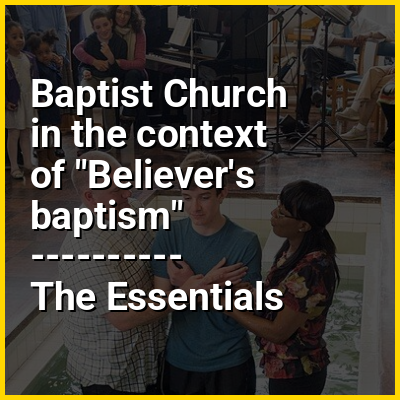
Baptists are a Protestant tradition of Christianity distinguished by baptizing only believers (believer's baptism) and doing so by total immersion. Modern Baptist churches generally subscribe to the doctrines of soul competency (the responsibility and accountability of every person before God), sola fide (justification by faith alone), sola scriptura (the Bible as the sole infallible authority) and congregationalist ecclesiastical polity. Baptists generally recognize at least two sacraments or ordinances: Baptism and the Lord's Supper.

Diverse from their beginnings, those identifying as Baptists today may differ widely from one another in what they believe, how they worship, their attitudes toward other Christians, and their understanding of what is important in Christian discipleship. Baptist missionaries have spread various Baptist churches to every continent. The largest Baptist communion of churches is the Baptist World Alliance, and there are many different groupings of Baptist churches and Baptist congregations.
↓ Menu

>>>PUT SHARE BUTTONS HERE<<<
In this Dossier

Baptist Church in the context of Lord's Day

In Christianity, the Lord's Day refers to Sunday, the traditional day of communal worship. It is the first day of the week in the Hebrew calendar and traditional Christian calendars. It is observed by most Christians as the weekly memorial of the resurrection of Jesus Christ, who is said to have been raised from the dead early on the first day of the week. The phrase appears only once in Rev. 1:10 of the New Testament.

According to Beckwith, Christians held corporate worship on Sunday in the 1st century (First Apology, chapter 67). On 3 March 321, Constantine the Great legislated rest on the pagan holiday Sunday (dies Solis). Before the Early Middle Ages, the Lord's Day became associated with Sabbatarian (rest) practices legislated by Church Councils. Christian denominations such as the Reformed Churches, Methodist Churches, and Baptist Churches regard Sunday as the Christian Sabbath, a practice known as first-day Sabbatarianism. First-day Sabbatarian (Sunday Sabbatarian) practices include attending morning and evening church services on Sundays, receiving catechesis in Sunday School on the Lord's Day, taking the Lord's Day off from servile labour, not eating at restaurants on Sundays, not Sunday shopping, not using public transportation on the Lord's Day, not participating in sporting events that are held on Sundays, as well as not viewing television and the internet on Sundays; Christians who are Sunday Sabbatarians often engage in works of mercy on the Lord's Day, such as evangelism, as well as visiting prisoners at jails and the sick at hospitals and nursing homes. A Sunday custom present in many Christian countries is the "hearing" (abhören) of children at dinnertime, in which the parents listen while the children recall what their pastor preached about in the Sunday sermon; if any corrections are needed, the parents instruct them.

↑ Return to Menu