Bābak Khorramdin (Persian: بابک خرمدین, Bābak-i Khurramdīn, from Middle Persian: 𐭯𐭠𐭯𐭪𐭩, Pāpak/Pābag; 795 or 798 – January 838) was one of the main Iranian revolutionary leaders of the Iranian Khorram-Dinān ("Those of the joyous religion"), which was a local freedom movement fighting the Abbasid Caliphate. Khorramdin appears to be a compound analogous to durustdin "orthodoxy" and Behdin "Good Religion" (Zoroastrianism), and are considered an offshoot of neo-Mazdakism. Babak's Iranianizing rebellion, from its base in Azerbaijan in northwestern Iran, called for a return of the political glories of the Iranian past. The Khorramdin rebellion of Babak spread to the western and central parts of Iran and lasted more than twenty years before it was defeated when Babak was betrayed. Babak's uprising showed the continuing strength in Azerbaijan of ancestral Iranian local feelings.
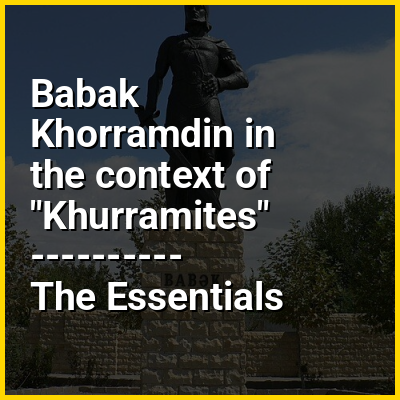
- ⭐ Core Definition: Babak Khorramdin
- Babak Khorramdin in the context of Sajid dynasty
- Babak Khorramdin in the context of Afshin (Caliphate General)
Babak Khorramdin in the context of Sajid dynasty
The Sajid dynasty (Persian: ساجیان, romanized: sâjiyân, also known as Banu Saj) was a Muslim dynasty, of Iranian origin, that ruled from 889/890 until 929. The Sajids ruled Azerbaijan and parts of Armenia first from Maragha and Barda and then from Ardabil. The Sajids originated from the Central Asian province of Ushrusana and were of Iranian (Sogdian) descent and culturally Arabised. Muhammad ibn Abi'l-Saj Diwdad the son of Diwdad, the first Sajid ruler of Azerbaijan, was appointed as its ruler in 889 or 890. Muhammad's father Abu'l-Saj Devdad had fought under the Ushrusanan prince Afshin Khaydar during the latter's final campaign against the rebel Babak Khorramdin in Azerbaijan, and later served the caliphs. Toward the end of the tenth century, as the central authority of the Abbasid Caliphate weakened, Muhammad was able to form a virtually independent state. Much of the Sajids' energies were spent in attempting to take control of neighboring Armenia. The dynasty ended with the death of Abu'l-Musafir al-Fath in 929.
View the full Wikipedia page for Sajid dynastyBabak Khorramdin in the context of Afshin (Caliphate General)
Ḥaydar ibn Kāwūs (Arabic: حيدر بن كاوس, Persian: خِیذَر اِبنِ کاووس, romanized: Kheyzar ebn-e Kāvus), better known by his hereditary title of al-Afshīn (Arabic: الأفشين, Persian: اَفشین, romanized: Afshin), was a senior general of Sogdian descent at the court of the Abbasid caliphs and a vassal prince of Oshrusana. He played a leading role in the campaigns of Caliph al-Mu'tasim, and was responsible for the suppression of the rebellion of Babak Khorramdin and for his battlefield victory over the Byzantine emperor Theophilos during the Amorium campaign. Eventually he was suspected of disloyalty and was arrested, tried and then executed in June 841.
View the full Wikipedia page for Afshin (Caliphate General)