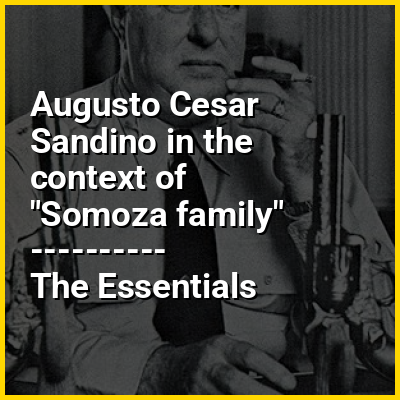
Augusto César Sandino (Latin American Spanish: [awˈɣusto se sanˈdino]; 18 May 1895 – 21 February 1934), full name Augusto Nicolás Calderón Sandino, was a Nicaraguan revolutionary, founder of the militant group EDSN, and leader of a rebellion between 1927 and 1933 against the United States occupation of Nicaragua. Despite being referred to as a "bandit" by the United States government, his exploits made him a hero throughout much of Latin America, where he became a symbol of resistance to American imperialism. Sandino drew units of the United States Marine Corps into an undeclared guerrilla war. The United States troops withdrew from the country in 1933 after overseeing the election and inauguration of President Juan Bautista Sacasa, who had returned from exile.
Sandino was executed in 1934 by National Guard forces of General Anastasio Somoza García, who went on to seize power in a coup d'état two years later. After being elected president by an overwhelming margin in 1936, Somoza García resumed control of the National Guard and established a dictatorship, with the Somoza family dynasty ruling Nicaragua for more than 40 years. Sandino's political legacy was claimed by the Sandinista National Liberation Front (FSLN), which overthrew the Somoza government in 1979 and then ensconced itself in power for more than 40 years.