Arthur, Prince of Wales in the context of "Edward IV of England"

Play Trivia Questions online!

or

Skip to study material about Arthur, Prince of Wales in the context of "Edward IV of England"

Ad spacer

⭐ Core Definition: Arthur, Prince of Wales

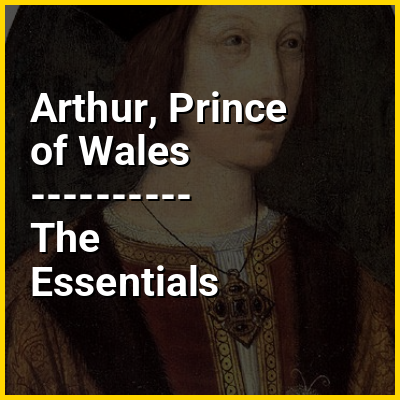
Arthur, Prince of Wales (19/20 September 1486 – 2 April 1502) was the eldest son of King Henry VII of England and Elizabeth of York, and an older brother to the future King Henry VIII. He was Duke of Cornwall from birth, and he was created Prince of Wales and Earl of Chester in 1489. As the heir apparent of his father, Arthur was viewed by contemporaries as the great hope of the newly established House of Tudor. His mother was the daughter of the Yorkist king, Edward IV, and his birth cemented the union between the House of Lancaster and the House of York.

Plans for Arthur's marriage began before his third birthday. At the age of eleven, he was formally betrothed to Catherine of Aragon, a daughter of the powerful Catholic Monarchs in Spain, in an effort to forge an Anglo-Spanish alliance against France and Scotland. Arthur was well educated and was in good health for the majority of his life. Soon after his marriage to Catherine in 1501, the couple took up residence at Ludlow Castle in Shropshire, where Arthur died six months later, possibly from the sweating sickness, which Catherine survived. Catherine later firmly stated that the marriage had not been consummated.
↓ Menu

>>>PUT SHARE BUTTONS HERE<<<
In this Dossier

Arthur, Prince of Wales in the context of Catherine of Aragon

Catherine of Aragon (also spelt as Katherine,historical Spanish: Catharina, now: Catalina; 16 December 1485 – 7 January 1536) was Queen of England as the first wife of King Henry VIII from their marriage on 11 June 1509 until its annulment on 23 May 1533. She had previously been Princess of Wales while married to Henry's elder brother, Arthur, Prince of Wales, for a short period before his death.

Catherine was born at the Archbishop's Palace of Alcalá de Henares, and was the youngest child of Isabella I of Castile and Ferdinand II of Aragon. She was three years old when she was betrothed to Arthur, the eldest son of Henry VII of England. They married in 1501, but Arthur died five months later. Catherine spent years in limbo, and during this time, she held the position of ambassador of the Aragonese crown to England in 1507, the first known female ambassador in European history. She married Henry VIII shortly after his accession in 1509. For six months in 1513, she served as regent of England while Henry was in France. During that time the English defeated a Scottish invasion at the Battle of Flodden, an event in which Catherine played an important part with an emotional speech about courage and patriotism.

↑ Return to Menu

Arthur, Prince of Wales in the context of Dogmersfield

Dogmersfield is a small village lying between the towns of Fleet and Hartley Wintney in Hampshire, England. The M3 motorway and railway stations at Fleet and Winchfield provide routes to London.

Places of interest include the village church, which is dedicated to All Saints, the Queen's Head pub and a mansion house, Dogmersfield Park. Henry VIII's elder brother Arthur, Prince of Wales, and his bride Catherine of Aragon are said to have stayed in the village. The land where the manor is located was recorded in the Domesday Book of 1086 as "Doccemere feld".

↑ Return to Menu

Arthur, Prince of Wales in the context of Worcester Cathedral

Worcester Cathedral, formally the Cathedral Church of Christ and Blessed Mary the Virgin, is a Church of England cathedral in Worcester, England. The cathedral is the seat of the bishop of Worcester and is the mother church of the diocese of Worcester; it is administered by its dean and chapter. The cathedral is a grade I listed building and part of a scheduled monument.

The cathedral was founded in 680. The earliest surviving fabric dates from 1084, when the cathedral was rebuilt in the Romanesque style by Bishop later Saint Wulfstan. The chapter house dates from 1120, and the nave was extended in the 1170s. It became a place of pilgrimage with the shrines of St Wulfstan and St Oswald. Between 1224 and 1269 the east end was rebuilt in the Early English Gothic style. The remainder of the nave was rebuilt in the 1360s, and the "exquisite" central tower completed in 1374. The cathedral retains a set of medieval misericords, now set into Victorian choir stalls; the cathedral was heavily restored in the nineteenth century, and contains a set of furnishings by George Gilbert Scott. It contains several funerary monuments, including those of King John; Arthur, Prince of Wales; and the prime minister Stanley Baldwin.

↑ Return to Menu