Arsenic contamination of groundwater in the context of Arsenic poisoning


Arsenic contamination of groundwater in the context of Arsenic poisoning

⭐ Core Definition: Arsenic contamination of groundwater

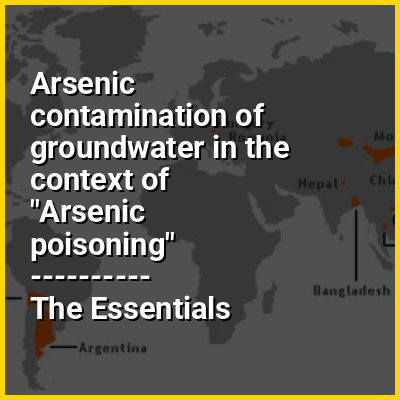
Arsenic contamination of groundwater is a form of groundwater pollution which is often due to naturally occurring high concentrations of arsenic in deeper levels of groundwater. It is a high-profile problem due to the use of deep tube wells for water supply in the Ganges Delta, causing serious arsenic poisoning to large numbers of people. A 2007 study found that over 137 million people in more than 70 countries are probably affected by arsenic poisoning of drinking water. The problem became a serious health concern after mass poisoning of water in Bangladesh. Arsenic contamination of ground water is found in many countries throughout the world, including the US.

The World Health Organization recommends limiting arsenic concentrations in water to 10 μg/L, although this is often an unattainable goal for many problem areas due to the difficult nature of removing arsenic from water sources.
↓ Menu
HINT:

In this Dossier

Arsenic contamination of groundwater in the context of Groundwater pollution

Groundwater pollution (also called groundwater contamination) occurs when pollutants are released to the ground and make their way into groundwater. This type of water pollution can also occur naturally due to the presence of a minor and unwanted constituent, contaminant, or impurity in the groundwater, in which case it is more likely referred to as contamination rather than pollution. Groundwater pollution can occur from on-site sanitation systems, landfill leachate, effluent from wastewater treatment plants, leaking sewers, petrol filling stations, hydraulic fracturing (fracking), or from over application of fertilizers in agriculture. Pollution (or contamination) can also occur from naturally occurring contaminants, such as arsenic or fluoride. Using polluted groundwater causes hazards to public health through poisoning or the spread of disease (water-borne diseases).

The pollutant often produces a contaminant plume within an aquifer. Movement of water and dispersion within the aquifer spreads the pollutant over a wider area. Its advancing boundary, often called a plume edge, can intersect with groundwater wells and surface water, such as seeps and springs, making the water supplies unsafe for humans and wildlife. The movement of the plume, called a plume front, may be analyzed through a hydrological transport model or groundwater model. Analysis of groundwater pollution may focus on soil characteristics and site geology, hydrogeology, hydrology, and the nature of the contaminants. Different mechanisms have influence on the transport of pollutants, e.g. diffusion, adsorption, precipitation, decay, in the groundwater.

View the full Wikipedia page for Groundwater pollution
↑ Return to Menu