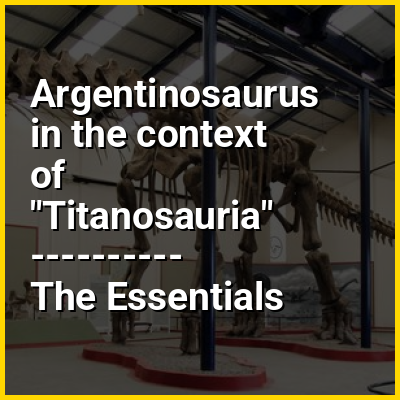
Argentinosaurus (meaning "lizard from Argentina") is a genus of giant sauropod dinosaur that lived during the Late Cretaceous period in what is now Argentina. Although it is only known from fragmentary remains, Argentinosaurus is one of the largest known land animals of all time, perhaps the largest, measuring 30–35 m (98–115 ft) long and weighing 65–80 t (72–88 short tons). It was a member of Titanosauria, the dominant group of sauropods during the Cretaceous.
The first Argentinosaurus bone was discovered in 1987 by a farmer on his farm near the city of Plaza Huincul. A scientific excavation of the site led by the Argentine palaeontologist José Bonaparte was conducted in 1989, yielding several back vertebrae and parts of a sacrum—fused vertebrae between the back and tail vertebrae. Additional specimens include a complete femur (thigh bone) and the shaft of another. Argentinosaurus was named by Bonaparte and the Argentine palaeontologist Rodolfo Coria in 1993; the genus contains a single species, A. huinculensis, after its place of discovery, Plaza Huincul.