There is an ongoing territorial dispute between Guyana and Venezuela over the Essequibo region (Spanish: Guayana Esequiba; Spanish pronunciation: [ɡwaˈʝana eseˈkiβa] ), a 159,500 km (61,600 sq mi) area west of the Essequibo River and even parts south of it. The territory, excluding the Venezuelan-controlled Ankoko Island, is controlled by Guyana as part of six of its regions, based on the 1899 Paris Arbitral Award. It is also claimed by Venezuela as the Guayana Esequiba State. The boundary dispute, also known as the Essequibo conflict, was inherited from the colonial powers (Spain in the case of Venezuela, and the Netherlands and the United Kingdom in the case of Guyana) and has persisted following the independence of Gran Colombia and Guyana.
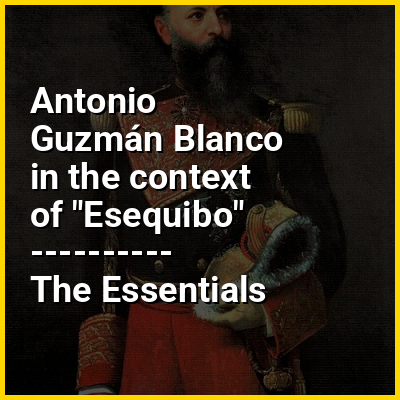
In 1835, the British government commissioned German-born explorer and naturalist Robert Hermann Schomburgk to survey British Guiana's boundaries. This survey resulted in what came to be known as the "Schomburgk Line", which was rejected by the Venezuelan government and the British, as even the extended Schomburgk Line did not include the entire Cuyuní River basin which was claimed by Britain. Tensions worsened after the discovery of gold mines in the region in 1876, culminating with Venezuelan president Antonio Guzmán Blanco severing diplomatic relations with the United Kingdom in 1887. As a result, Venezuela elected the United States as their representative, leaving no Venezuelan citizen to represent their country's interests. The United Kingdom and Venezuela went into arbitration with mediation from the United States, which resulted in the Paris Arbitral Award in 1899 and ruled largely in favour of Britain. In 1949, a memorandum written by Severo Mallet-Prevost, official secretary of the US–Venezuela delegation in the arbitration, and published posthumously, stated that the Arbitral Award resulted from the pressure by the Tribunal President Friedrich Martens and a political deal between Russia and Britain. Said memorandum led to complaints by Venezuela in the United Nations in 1962, which resulted in the Geneva Agreement, signed with the United Kingdom in 1966.