Anton Ažbe in the context of Mstislav Dobuzhinsky


Anton Ažbe in the context of Mstislav Dobuzhinsky

⭐ Core Definition: Anton Ažbe

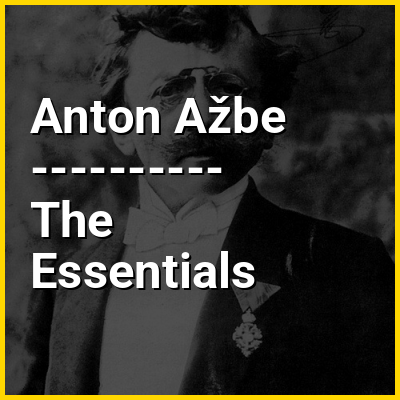
Anton Ažbe (30 May 1862 – 5 or 6 August 1905) was a Slovene realist painter and teacher of painting. Ažbe, crippled since birth and orphaned at the age of eight, learned painting as an apprentice to Janez Wolf and at the Academies in Vienna and Munich. At the age of 30, Ažbe founded his own school of painting in Munich that became a popular attraction for Eastern European students. Ažbe trained the "big four" Slovenian impressionists (Rihard Jakopič, Ivan Grohar, Matej Sternen, Matija Jama), a whole generation of Russian painters (Ivan Bilibin, Mstislav Dobuzhinsky, Igor Grabar, Wassily Kandinsky, Dmitry Kardovsky and Kuzma Petrov-Vodkin, to name a few), Serbian painters Nadežda Petrović, Beta Vukanović, Ljubomir Ivanović, Borivoje Stevanović, Kosta Miličević, and Milan Milovanović, the Hungarian painter Sándor Ziffer or a Czech painter Ludvik Kuba.

Ažbe's training methods were adopted by Beta and Rista Vukanović when they took over Kiril Kutlik's atelier and school and by Russian artists both at home (Grabar, Kardovsky) and in emigration (Bilibin, Dobuzhinsky).
↓ Menu
HINT:

In this Dossier

Anton Ažbe in the context of Wassily Kandinsky

Wassily Wassilyevich Kandinsky (16 December [O.S. 4 December] 1866 – 13 December 1944) was a Russian painter and art theorist. Kandinsky is generally credited as one of the pioneers of abstraction in western art. Born in Moscow, he began painting studies (life-drawing, sketching and anatomy) at the age of 30.

In 1896, Kandinsky settled in Munich, studying first at Anton Ažbe's private school and then at the Academy of Fine Arts. During this time, he was first the teacher and then the partner of German artist Gabriele Münter. He returned to Moscow in 1914 after the outbreak of World War I. Following the Russian Revolution, Kandinsky "became an insider in the cultural administration of Anatoly Lunacharsky" and helped establish the Museum of the Culture of Painting. However, by then, "his spiritual outlook... was foreign to the argumentative materialism of Soviet society" and opportunities beckoned in Germany, to which he returned in 1920. There, he taught at the Bauhaus school of art and architecture from 1922 until the Nazis closed it in 1933. He then moved to France, where he lived for the rest of his life, becoming a French citizen in 1939 and producing some of his most prominent art. He died in Neuilly-sur-Seine in 1944.

View the full Wikipedia page for Wassily Kandinsky
↑ Return to Menu

Anton Ažbe in the context of Vasily Kandinsky

Wassily Wassilyevich Kandinsky (16 December [O.S. 4 December] 1866 – 13 December 1944) was a Russian painter and art theorist active in Germany during the late Belle Époque and Interwar eras. Kandinsky is generally credited as one of the pioneers of abstraction in Western art. Born in Moscow, he began painting studies (life-drawing, sketching and anatomy) at the age of 30.

In 1896, Kandinsky settled in Munich, studying first at Anton Ažbe's private school and then at the Academy of Fine Arts. During this time, he was first the teacher and then the partner of German artist Gabriele Münter. He returned to Moscow in 1914 after the outbreak of World War I. Following the Russian Revolution, Kandinsky "became an insider in the cultural administration of Anatoly Lunacharsky" and helped establish the Museum of the Culture of Painting. However, by then, "his spiritual outlook... was foreign to the argumentative materialism of Soviet society" and opportunities beckoned in Germany, to which he returned in 1920. There, he taught at the Bauhaus school of art and architecture from 1922 until the Nazis closed it in 1933. He then moved to France, where he lived for the rest of his life, becoming a French citizen in 1939 and producing some of his most prominent art. He died in Neuilly-sur-Seine in 1944.

View the full Wikipedia page for Vasily Kandinsky
↑ Return to Menu

Anton Ažbe in the context of Matej Sternen

Matej Sternen (20 September 1870 – 28 June 1949) was a leading Slovene Impressionist painter.

Sternen was born in the Carniolan village of Verd—now part of the Municipality of Vrhnika, Slovenia, then part of the Austro-Hungarian Empire—and baptized Matthæus Strnen. He attended the secondary school in Krško and attended technical school in Graz between 1888 and 1891. After finishing the school in Graz, he enrolled at the Academy of Fine Arts in Vienna. In 1897 he left Vienna for Munich, where he studied at Anton Ažbe's private art school. He lived and worked in the Bavarian capital until Ažbe's death in 1905.

View the full Wikipedia page for Matej Sternen
↑ Return to Menu

Anton Ažbe in the context of Igor Grabar

Igor Emmanuilovich Grabar (Russian: И́горь Эммануи́лович Граба́рь, 25 March 1871 – 16 May 1960) was a Russian Post-Impressionist painter, publisher, restorer and historian of art. Grabar, descendant of a wealthy Rusyn family, was trained as a painter by Ilya Repin in Saint Petersburg and by Anton Ažbe in Munich. He reached his peak in painting in 1903–1907 and was notable for a peculiar divisionist painting technique bordering on pointillism and his rendition of snow.

By the end of 1890s, Grabar had established himself as an art critic. In 1902, he joined Mir Iskusstva, although his relations with its leaders Sergei Diaghilev and Mstislav Dobuzhinsky were far from friendly. In 1910–1915, Grabar edited and published his opus magnum, the History of Russian Art. The History employed the finest artists and critics of the period; Grabar personally wrote the issues on architecture that set an unsurpassed standard of understanding and presenting the subject. Concurrently, he wrote and published a series of books on contemporary and historic Russian painters. In 1913, he was appointed executive director of the Tretyakov Gallery and launched an ambitious reform program that continued until 1926. Grabar diversified the Tretyakov collection into modern art and in 1917 published its first comprehensive catalogue. In 1921 Grabar became the first professor of Art restoration at the Moscow State University.

View the full Wikipedia page for Igor Grabar
↑ Return to Menu

Anton Ažbe in the context of Nadežda Petrović

Nadežda Petrović (Serbian Cyrillic: Надежда Петровић; 11/12 October 1873 – 3 April 1915) was a Serbian painter and one of the women war photography pioneers in the region. Considered Serbia's most famous expressionist and fauvist, she was the most important Serbian female painter of the period. Born in the town of Čačak, Petrović moved to Belgrade in her youth and attended the women's school of higher education there. Graduating in 1891, she taught there for a period beginning in 1893 before moving to Munich to study with Slovenian artist Anton Ažbe. Between 1901 and 1912, she exhibited her work in many cities throughout Europe.

In the later years of her life, Petrović had little time to paint and produced only a few works. In 1912, she volunteered to become a nurse following the outbreak of the Balkan Wars. She continued nursing Serbian soldiers until 1913, when she contracted typhus and cholera. She earned a Medal for Bravery and an Order of the Red Cross for her efforts. With the outbreak of World War I she again volunteered to become a nurse with the Serbian Army, eventually dying of typhus on 3 April 1915.

View the full Wikipedia page for Nadežda Petrović
↑ Return to Menu