Annunciation in Christian art in the context of "Simone Martini"

Play Trivia Questions online!

or

Skip to study material about Annunciation in Christian art in the context of "Simone Martini"


⭐ Core Definition: Annunciation in Christian art

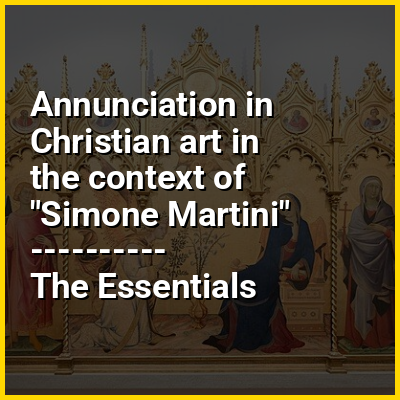
The Annunciation has been one of the most frequent subjects of Christian art. Depictions of the Annunciation go back to early Christianity, with the Priscilla catacomb in Rome including the oldest known fresco of the Annunciation, dating to the 4th century.

Scenes depicting the Annunciation represent the perpetual virginity of Mary via the announcement by the angel Gabriel that Mary would conceive a child to be born the son of God.
↓ Menu

In this Dossier

Annunciation in Christian art in the context of Annunciation (Leonardo)

The Annunciation is a painting by the Italian Renaissance artist Leonardo da Vinci, dated to c. 1472–1476. Leonardo's earliest extant major work, it was completed in Florence while he was an apprentice in the studio of Andrea del Verrocchio. The painting was made using oil and tempera on a large poplar panel and depicts the Annunciation, a popular biblical subject in 15th-century Florence. Since 1867 it has been housed in the Uffizi in Florence, the city where it was created. Though the work has been criticized for inaccuracies in its composition, it is among the best-known portrayals of the Annunciation in Christian art.
Cite error: There are <ref group=n> tags on this page, but the references will not show without a {{reflist|group=n}} template (see the help page).

↑ Return to Menu