Anna Akhmatova in the context of Censorship in the Soviet Union


Anna Akhmatova in the context of Censorship in the Soviet Union

⭐ Core Definition: Anna Akhmatova

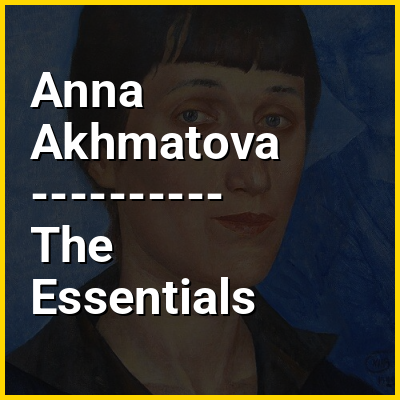
Anna Andreyevna Gorenko (23 June [O.S. 11 June] 1889 – 5 March 1966), better known by the pen name Anna Akhmatova, was a Russian and Soviet poet, one of the most significant of the 20th century. She reappeared as a voice of Russian poetry during World War II. She was nominated for the Nobel Prize in Literature in 1965 and 1966.

Akhmatova's work ranges from short lyric poems to intricately structured cycles, such as Requiem (1935–40), her tragic masterpiece about the Stalinist terror. Her style, characterised by its economy and emotional restraint, was strikingly original and distinctive to her contemporaries. The strong and clear leading female voice struck a new chord in Russian poetry. Her writing can be said to fall into two periods – the early work (1912–25) and her later work (from around 1936 until her death), divided by a decade of reduced literary output. Her work was condemned and censored by Stalinist authorities, and she is notable for choosing not to emigrate and remaining in the Soviet Union, acting as witness to the events around her. Her perennial themes include meditations on time and memory, and the difficulties of living and writing in the shadow of Stalinism.
↓ Menu
HINT:

In this Dossier

Anna Akhmatova in the context of Russian literature

Russian literature refers to the literature of Russia, its émigrés, and to Russian-language literature. Major contributors to Russian literature, as well as English for instance, are authors of different ethnic origins, including bilingual writers, such as Kyrgyz novelist Chinghiz Aitmatov. At the same time, Russian-language literature does not include works by authors from the Russian Federation who write exclusively or primarily in the native languages of the indigenous non-Russian ethnic groups in Russia, thus the famous Dagestani poet Rasul Gamzatov is omitted.

The roots of Russian literature can be traced to the Early Middle Ages when Old Church Slavonic was introduced as a liturgical language and became used as a literary language. The native Russian vernacular remained the use within oral literature as well as written for decrees, laws, messages, chronicles, military tales, and so on. By the Age of Enlightenment, literature had grown in importance, and from the early 1830s, Russian literature underwent an astounding "Golden Age" in poetry, prose and drama. The Romantic movement contributed to a flowering of literary talent: poet Vasily Zhukovsky and later his protégé Alexander Pushkin came to the fore. Mikhail Lermontov was one of the most important poets and novelists. Nikolai Gogol and Ivan Turgenev wrote masterful short stories and novels. Fyodor Dostoevsky and Leo Tolstoy became internationally renowned. Other important figures were Ivan Goncharov, Mikhail Saltykov-Shchedrin and Nikolai Leskov. In the second half of the century Anton Chekhov excelled in short stories and became a leading dramatist. The end of the 19th century and the beginning of the 20th century is sometimes called the Silver Age of Russian poetry. The poets most often associated with the "Silver Age" are Konstantin Balmont, Valery Bryusov, Alexander Blok, Anna Akhmatova, Nikolay Gumilyov, Sergei Yesenin, Vladimir Mayakovsky, and Marina Tsvetaeva. This era produced novelists and short-story writers, such as Aleksandr Kuprin, Nobel Prize winner Ivan Bunin, Leonid Andreyev, Fyodor Sologub, Yevgeny Zamyatin, Alexander Belyaev, Andrei Bely and Maxim Gorky.

View the full Wikipedia page for Russian literature
↑ Return to Menu

Anna Akhmatova in the context of Nikolay Gumilyov

Nikolai Stepanovich Gumilev (also Gumilyov; Russian: Николай Степанович Гумилёв, IPA: [nʲɪkɐˈlaj sʲtʲɪˈpanəvʲɪtɕ ɡʊmʲɪˈlʲɵf] ; April 15 [O.S. 3 April] 1886 – August 26, 1921) was a Russian poet, literary critic, traveler, and military officer. He was a co-founder of the Acmeist movement. He was the husband of Anna Akhmatova and the father of Lev Gumilev. Nikolai Gumilev was arrested and executed by the Cheka, the secret Soviet police force, in 1921.

View the full Wikipedia page for Nikolay Gumilyov
↑ Return to Menu

Anna Akhmatova in the context of Requiem (Anna Akhmatova)

Requiem (Russian: Реквием, Rekviem) is an elegy by Anna Akhmatova about the suffering of people under the Great Purge. It was written over three decades, between 1935 and 1961. She carried it with her, redrafting, as she worked and lived in towns and cities across the Soviet Union. The set of poems was conspicuously absent from her collected works, given its explicit condemnation of the purges. The work in Russian finally appeared in book form in Munich in 1963; the whole work was not published within the USSR until 1987. It would become the best known work of poetry about Soviet Great Terror.

View the full Wikipedia page for Requiem (Anna Akhmatova)
↑ Return to Menu