Amakusa Shirō in the context of Catholic Church in Japan


Amakusa Shirō in the context of Catholic Church in Japan

⭐ Core Definition: Amakusa Shirō

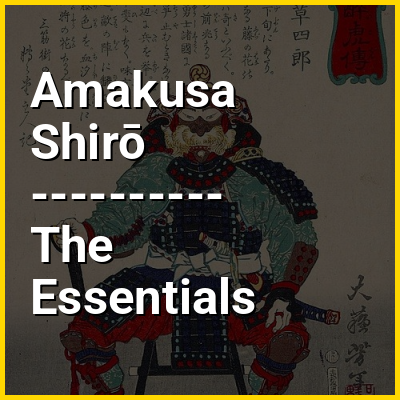
Masuda Shirō Tokisada (益田 四郎 時貞; c. 1621? – 28 February 1638), also known as Amakusa Shirō (天草 四郎), was a Japanese Christian of the Edo period and leader of the Shimabara Rebellion, an uprising of Japanese Roman Catholics against the Shogunate. His Christian name was Geronimo and was later known as Francisco.

The uprising led by Shirō was defeated, and he was executed at the age of 17. His head was displayed on a pike near Nagasaki as a warning to Christians. His failures were reflected in the 1962 movie Amakusa Shirō Tokisada [ja] (shown in English-speaking countries as The Christian Revolt or The Revolutionary), by the Japanese movie director Nagisa Oshima.
↓ Menu
HINT:

In this Dossier

Amakusa Shirō in the context of Shimabara Rebellion

The Shimabara Rebellion (島原の乱, Shimabara no ran), also known as the Shimabara-Amakusa Rebellion (島原・天草の乱, Shimabara-Amakusa no ran) or Shimabara-Amakusa Ikki (島原・天草一揆), was an uprising that occurred in the Shimabara Domain of the Tokugawa shogunate in Japan from 17 December 1637 to 15 April 1638.

Matsukura Katsuie, the daimyō of the Shimabara Domain, enforced unpopular policies set by his father Matsukura Shigemasa that drastically raised taxes to construct the new Shimabara Castle and violently prohibited Christianity. In December 1637, an alliance of local rōnin and mostly Catholic peasants led by Amakusa Shirō rebelled against the Tokugawa shogunate due to discontent over Katsuie's policies. The Tokugawa shogunate sent a force of over 125,000 troops supported by the Dutch to suppress the rebels, which defeated the rebels after a lengthy siege against their stronghold at Hara Castle in Minamishimabara.

View the full Wikipedia page for Shimabara Rebellion
↑ Return to Menu