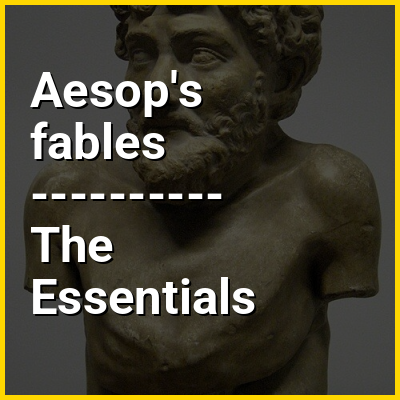
Aesop's Fables, or the Aesopica, is a collection of fables credited to Aesop, a slave and storyteller who lived in ancient Greece between 620 and 564 BCE. Of varied and unclear origins, the stories associated with his name have descended to modern times through a number of sources and continue to be reinterpreted in different verbal registers and in popular as well as artistic media.
The fables were part of oral tradition and were not collected until about three centuries after Aesop's death. By that time, a variety of other stories, jokes and proverbs were being ascribed to him, although some of that material was from sources earlier than him or came from beyond the Greek cultural sphere. The process of inclusion has continued until the present, with some of the fables unrecorded before the Late Middle Ages and others arriving from outside Europe. The process is continuous and new stories are still being added to the Aesop corpus, even when they are demonstrably more recent work and sometimes from known authors.