Aerotolerant anaerobe in the context of "Aerobic organism"

Play Trivia Questions online!

or

Skip to study material about Aerotolerant anaerobe in the context of "Aerobic organism"

Ad spacer

⭐ Core Definition: Aerotolerant anaerobe

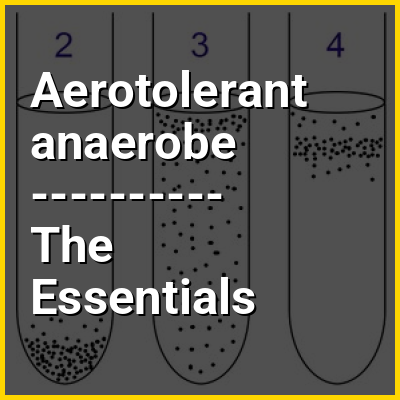
Aerotolerant anaerobes use fermentation to produce ATP. They do not use oxygen, but they can protect themselves from reactive oxygen molecules. In contrast, obligate anaerobes can be harmed by reactive oxygen molecules.

There are three categories of anaerobes. Where obligate aerobes require oxygen to grow, obligate anaerobes are damaged by oxygen, aerotolerant organisms cannot use oxygen but tolerate its presence, and facultative anaerobes use oxygen if it is present but can grow without it.

↓ Menu

>>>PUT SHARE BUTTONS HERE<<<
In this Dossier

Aerotolerant anaerobe in the context of Aerobe

An aerobic organism or aerobe is an organism that can survive and grow in an oxygenated environment. The ability to exhibit aerobic respiration may yield benefits to the aerobic organism, as aerobic respiration yields more energy than anaerobic respiration. Energy production of the cell involves the synthesis of ATP by an enzyme called ATP synthase. In aerobic respiration, ATP synthase is coupled with an electron transport chain in which oxygen acts as a terminal electron acceptor. In July 2020, marine biologists reported that aerobic microorganisms (mainly), in "quasi-suspended animation", were found in organically poor sediments, up to 101.5 million years old, 250 feet below the seafloor in the South Pacific Gyre (SPG) ("the deadest spot in the ocean"), and could be the longest-living life forms ever found.

↑ Return to Menu

Aerotolerant anaerobe in the context of Facultative anaerobes

A facultative anaerobic organism is an organism that makes ATP by aerobic respiration if oxygen is present, but is capable of switching to fermentation if oxygen is absent.

Some examples of facultatively anaerobic bacteria are Staphylococcus spp., Escherichia coli, Salmonella, Listeria spp., Shewanella oneidensis and Yersinia pestis. Certain eukaryotes are also facultative anaerobes, including pupfish, fungi such as Saccharomyces cerevisiae and many aquatic invertebrates such as nereid polychaetes.

↑ Return to Menu

Aerotolerant anaerobe in the context of Lactobacillus

Lactobacillus is a genus of gram-positive within the Lactobacillaceae family, aerotolerant anaerobes or microaerophilic, rod-shaped, non-spore-forming bacteria. Until 2020, the genus Lactobacillus comprised over 260 phylogenetically, ecologically, and metabolically diverse species; a taxonomic revision of the genus assigned lactobacilli to 25 genera (see § Taxonomy below).

Lactobacillus species constitute a significant component of the human and animal microbiota at a number of body sites, such as the digestive system and the female genital system. In women of European ancestry, Lactobacillus species are normally a major part of the vaginal microbiota. Lactobacillus forms biofilms in the vaginal and gut microbiota, allowing them to persist in harsh environmental conditions and maintain ample populations. Lactobacillus exhibits a mutualistic relationship with the human body, as it protects the host against potential invasions by pathogens, and in turn, the host provides a source of nutrients. Lactobacilli are among the most common probiotic found in food such as yogurt, and the bacteria are diverse in their application in maintaining human well-being, by helping to treat diarrhea, vaginal infections, and skin disorders such as eczema.
↑ Return to Menu

Aerotolerant anaerobe in the context of Lactobacillales

Lactobacillales are an order of gram-positive, low-GC, acid-tolerant, generally nonsporulating, nonrespiring, either rod-shaped (bacilli) or spherical (cocci) bacteria that share common metabolic and physiological characteristics. These bacteria, usually found in decomposing plants and milk products, produce lactic acid as the major metabolic end product of carbohydrate fermentation, giving them the common name lactic acid bacteria (LAB).

Production of lactic acid has linked LAB with food fermentations, as acidification inhibits the growth of spoilage agents. Proteinaceous bacteriocins are produced by several LAB strains and provide an additional hurdle for spoilage and pathogenic microorganisms. Furthermore, lactic acid and other metabolic products contribute to the organoleptic and textural profile of a food item. The industrial importance of the LAB is further evidenced by their generally recognized as safe (GRAS) status, due to their ubiquitous appearance in food and their contribution to the healthy microbiota of animal and human mucosal surfaces.

↑ Return to Menu