Adipocyte in the context of "Osteoblasts"

Play Trivia Questions online!

or

Skip to study material about Adipocyte in the context of "Osteoblasts"


⭐ Core Definition: Adipocyte

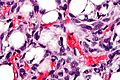
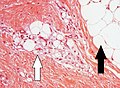
Adipocytes, also known as lipocytes and fat cells, are the cells that primarily compose adipose tissue, specialized in storing energy as fat. Adipocytes are derived from mesenchymal stem cells which give rise to adipocytes through adipogenesis. In cell culture, adipocyte progenitors can also form osteoblasts, myocytes and other cell types.

There are two types of adipose tissue, white adipose tissue (WAT) and brown adipose tissue (BAT), which are also known as white and brown fat, respectively, and comprise two types of fat cells.

↓ Menu

In this Dossier

Adipocyte in the context of Visceral fat

Adipose tissue (also known as body fat or simply fat) is a loose connective tissue composed mostly of adipocytes. It also contains the stromal vascular fraction (SVF) of cells including preadipocytes, fibroblasts, vascular endothelial cells and a variety of immune cells such as adipose tissue macrophages. Its main role is to store energy in the form of lipids, although it also cushions and insulates the body.

Previously treated as being hormonally inert, in recent years adipose tissue has been recognized as a major endocrine organ, as it produces hormones such as leptin, estrogen, resistin, and cytokines (especially TNFα). In obesity, adipose tissue is implicated in the chronic release of pro-inflammatory markers known as adipokines, which are responsible for the development of metabolic syndrome—a constellation of diseases including type 2 diabetes, cardiovascular disease and atherosclerosis.

↑ Return to Menu

Adipocyte in the context of Preadipocyte

A lipoblast is a precursor cell for an adipocyte. Alternate terms include adipoblast and preadipocyte. Early stages are almost indistinguishable from fibroblasts.

↑ Return to Menu

Adipocyte in the context of Leptin

Leptin (from Greek λεπτός leptos, "thin" or "light" or "small"), also known as obese protein, is a protein hormone predominantly made by adipocytes (cells of adipose tissue). Its primary role is likely to regulate long-term energy balance.

As one of the major signals of energy status, leptin levels influence appetite, satiety, and motivated behaviors oriented toward the maintenance of energy reserves (e.g., feeding, foraging behaviors).

↑ Return to Menu

Adipocyte in the context of Metaphysis

The metaphysis (pl.: metaphyses) is the neck portion of a long bone between the epiphysis and the diaphysis. It contains the growth plate, the part of the bone that grows during childhood, and as it grows it ossifies near the diaphysis and the epiphyses. The metaphysis contains a diverse population of cells including mesenchymal stem cells, which give rise to bone and fat cells, as well as hematopoietic stem cells which give rise to a variety of blood cells as well as bone-destroying cells called osteoclasts. Thus the metaphysis contains a highly metabolic set of tissues including trabecular (spongy) bone, blood vessels, as well as marrow adipose tissue (MAT).

The metaphysis may be divided anatomically into three components based on tissue content: a cartilaginous component (epiphyseal plate), a bony component (metaphysis) and a fibrous component surrounding the periphery of the plate. The growth plate synchronizes chondrogenesis with osteogenesis or interstitial cartilage growth with both appositional bone elongation in conjunction with growth in width, so bearing load and responding to local and systemic forces and factors balance one another mechanically.

↑ Return to Menu

Adipocyte in the context of Mesenchymal stem cell

Mesenchymal stem cells (MSCs), also known as mesenchymal stromal cells or medicinal signaling cells, are multipotent stromal cells that can differentiate into a variety of cell types, including osteoblasts (bone cells), chondrocytes (cartilage cells), myocytes (muscle cells) and adipocytes (fat cells which give rise to marrow adipose tissue).

The primary function of MSCs is to respond to injury and infection by secreting and recruiting a range of biological factors, as well as modulating inflammatory processes to facilitate tissue repair and regeneration. Extensive research interest has led to more than 80,000 peer-reviewed papers on MSCs.

↑ Return to Menu