Adenosine deaminase in the context of Purine metabolism


Adenosine deaminase in the context of Purine metabolism

⭐ Core Definition: Adenosine deaminase

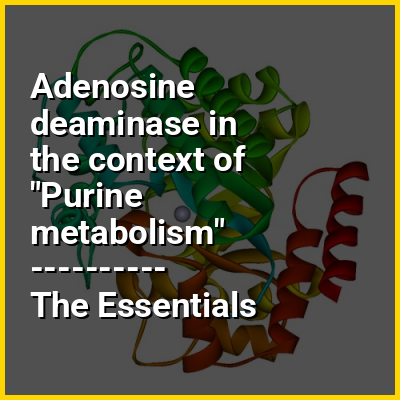
Adenosine deaminase (also known as adenosine aminohydrolase, or ADA) is an enzyme (EC 3.5.4.4) involved in purine metabolism. It is needed for the breakdown of adenosine from food and for the turnover of nucleic acids in tissues.

Its primary function in humans is the development and maintenance of the immune system. However, the full physiological role of ADA is not yet completely understood.
↓ Menu
HINT:

In this Dossier

Adenosine deaminase in the context of Deoxyadenosine

Deoxyadenosine (symbol dA or dAdo) is a deoxyribonucleoside. It is a derivative of the nucleoside adenosine, differing from the latter by the replacement of a hydroxyl group (-OH) by hydrogen (-H) at the 2′ position of its ribose sugar moiety. Deoxyadenosine is the DNA nucleoside A, which pairs with deoxythymidine (T) in double-stranded DNA.

In absence of adenosine deaminase (ADA) it accumulates in T lymphocytes and kills these cells resulting in a genetic disorder known as adenosine deaminase severe combined immunodeficiency disease (ADA-SCID).

View the full Wikipedia page for Deoxyadenosine
↑ Return to Menu