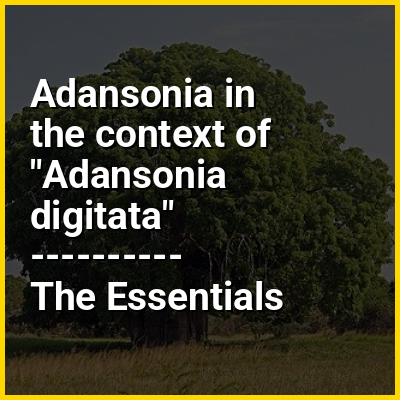
Adansonia is a genus of medium-to-large deciduous trees known as baobabs (/ˈbaʊbæb/ or /ˈbeɪoʊbæb/). The eight species of Adansonia are native to Africa, Australia, and Madagascar but have also been introduced to other regions of the world, including Barbados, where several of the baobabs there are suspected to have originated from Africa. Other baobabs have been introduced to Asia. A genomic and ecological analysis further suggests that the genus itself originated from Madagascar.
The generic name Adansonia honours Michel Adanson, the French naturalist and explorer who provided the first detailed botanical description and illustrations of Adansonia digitata. The baobab, however, is also known as the "upside down tree," a name attributable to the trees' overall appearance and historical myths. Baobabs are among the longest-lived of vascular plants and have large flowers that are reproductive for a maximum of 15 hours. The flowers open around dusk with sufficiently rapid movement that is detectable by the naked eye. The fruits are large, oval to round and berry-like, and hold kidney-shaped seeds in a dry, pulpy matrix.